

You know the moment. You're on the first tee in a shirt that looked sharp on the hanger, then the sun climbs, your back gets sticky by the fourth hole, the placket starts to curl, and by the time someone suggests a drink after the round you feel dressed for neither sport nor society. That's usually when golfers start wondering whether high end men's golf apparel is worth it, or whether it's just expensive cotton with better branding.
The useful answer isn't about status. It's about friction. Good golf clothes remove it. They let you turn through the ball without the shoulders grabbing, walk in heat without feeling shrink-wrapped, and sit down afterward without looking like you've come straight from a boot camp sponsored by loud logos.
That matters because men's golf apparel isn't some tiny side shelf in the wider market. One major estimate valued the men's segment at USD 2.2 billion in 2023 with a projected 7% CAGR, while another forecast put men at 50.1% of the golf apparel market in 2024 and the overall market at USD 4.5 billion that year (Grand View Research). In other words, brands have room to make specialized products instead of one-size-fits-most polos with a crest slapped on the chest.
Premium doesn't always mean paying full whack either. If you're comparing seasons and timing your wardrobe refresh around markdown periods, a tool like the Debenhams sale calendar can help you plan purchases more sensibly instead of panic-buying a shirt five minutes before a golf trip.
Introduction Why High End Matters Beyond the Logo
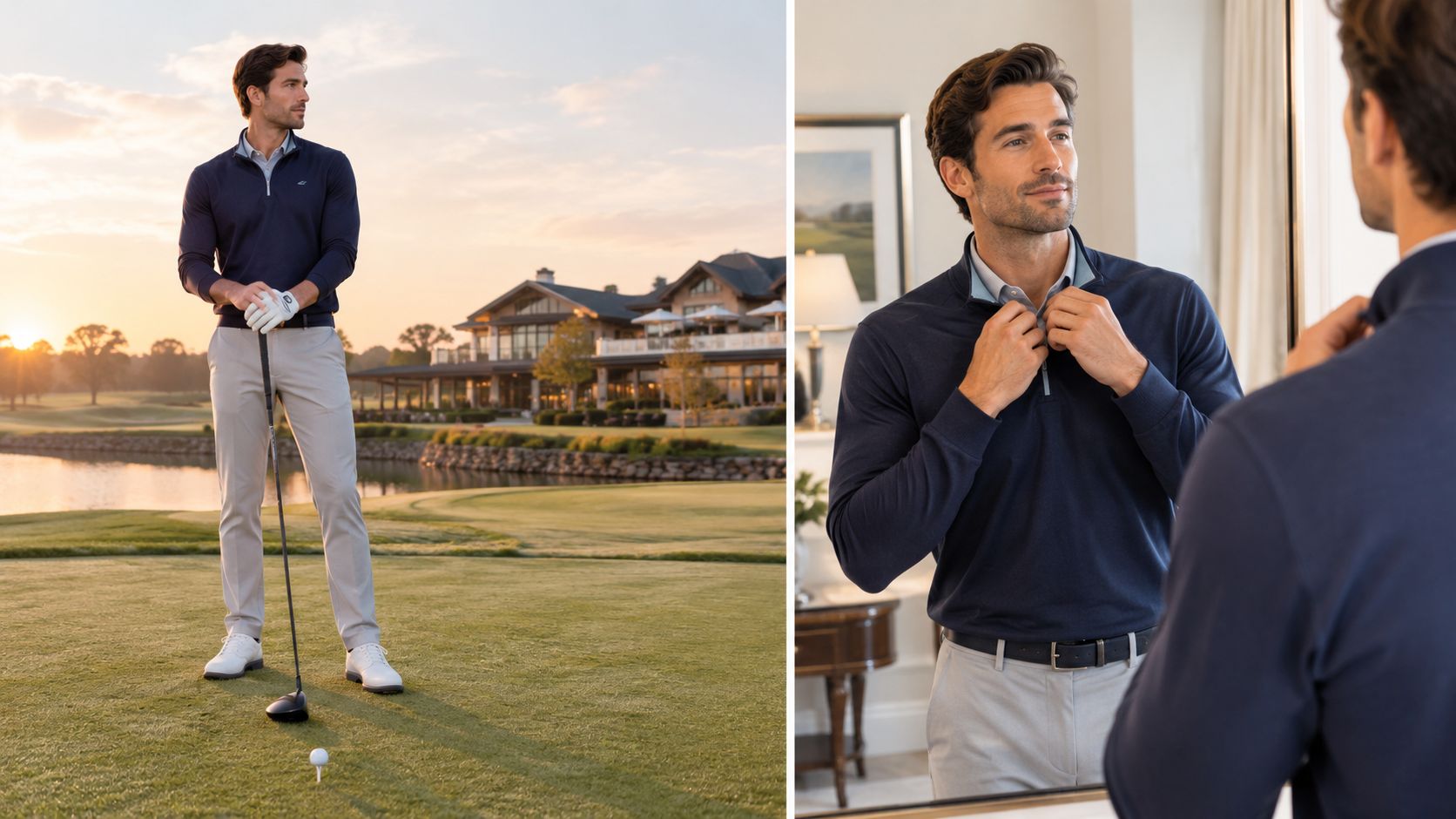
You finish a warm afternoon round, head inside, and catch your reflection in the clubhouse window. If the shirt is twisting at the placket, the collar has gone soft, and the fabric looks tired before the first drink arrives, the problem is not style alone. It is performance, construction, and versatility failing at the same time.
High end men's golf apparel earns its keep in that handoff from course to clubhouse. The best pieces do more than look expensive on a hanger. They regulate heat, hold their shape, allow rotation through the swing, and still read as polished once the glove comes off. Price can signal quality, but it does not create it.
That is where many golfers get misled. They judge a premium polo the way they might judge a watch or a belt, by branding, packaging, or a lofty price tag. Golf clothing works more like a well-tuned set of tires. The magic sits in the compound, the cut, the stitching, and how the whole thing responds under pressure.
A better filter is simple.
Ask what the garment is doing for you at address, through the swing, after a walk in heat, and later over lunch. If it moves moisture instead of trapping it, keeps its line instead of collapsing, and looks at home both on the fairway and at the 19th hole, you are looking at premium in the useful sense of the word.
That practical lens matters when you shop, too. Full price is not the only route into better kit, and timing still counts. If you prefer to buy carefully rather than impulsively, the Debenhams sale calendar can help you plan around markdown periods.
That is also why this subject fits naturally within the broader 2ndShotMVP world of headwear and lifestyle apparel. Good golf style behaves like a system. Cap, collar, layer, trouser line, and fabric all need to work together, so you look comfortable rather than costumed.
High end, then, is not a logo contest. It is fabric physics, smart construction, and enough versatility to carry you from first tee to final drink without asking for a wardrobe change.
What High End Really Means in Mens Golf Apparel Today
A premium golf shirt should solve two jobs at once. It needs to behave during a four-hour round, then still look intentional when you sit down for a drink afterward. That double duty is the clearest modern test of high end.
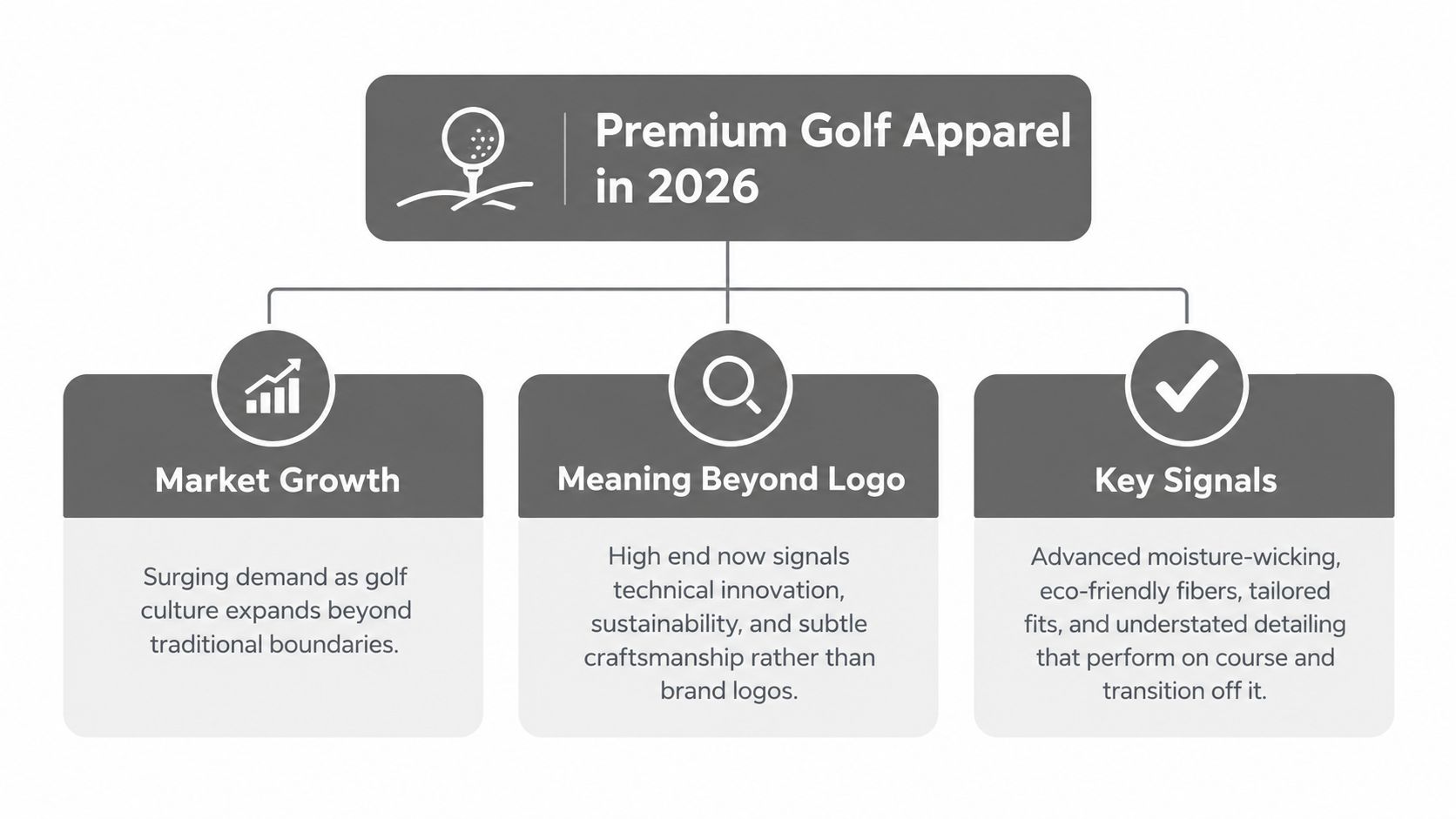
The category grew up. Brands now build golf clothing with the same level of planning you see in technical running gear and modern tailoring. You are paying for fabric behavior, pattern cutting, finishing, and versatility, not a crest on the chest.
Premium changed when performance became the point
For a long stretch, expensive golf clothing signaled polish in a fairly traditional way. Crisp trousers, tidy knits, country-club neatness. Then performance fabric stopped being a novelty and became part of the standard for serious players. Ralph Dunning's 2001 line, described by The Golf Wire as the first golf apparel collection made exclusively from performance fabrics, marked an early shift in that direction (The Golf Wire).
Once that happened, the meaning of premium changed with it. Higher-end pieces could justify their place through lighter weight, better stretch, faster drying, and a cleaner shape on the body. In other words, luxury stopped living only in appearance. It moved into function.
Price matters less than the reason behind it
A useful way to judge high end is to ask what, exactly, costs more.
If the answer is branding, you are buying a label premium. If the answer is better yarns, more stable collars, cleaner stitching, sharper pattern work, and a piece that survives both heat and post-round social life, the extra cost has a job.
That practical filter keeps you out of the weeds:
| Signal | Lower-value version | High-end version |
|---|---|---|
| Price | Driven mostly by logo position and hype | Driven by fabric quality, construction, and design consistency |
| Style | Trendy for one season | Understated enough to wear for years |
| Performance | Stretch claim on the tag | Comfort, mobility, and shape retention you can actually feel |
| Versatility | Reads like pure sportswear | Works on the course, in the clubhouse, and at lunch |
What high end means now
Current golf style has moved toward quieter pieces, softer textures, knit polos, and more refined color palettes. You can see the shift on courses, in clubhouses, and in what players keep wearing after the novelty phase passes. The best premium pieces feel less costume-like and more like reliable wardrobe players.
So what counts as high end today? Usually three things working together.
- Technical honesty: the garment performs under golf conditions, not just in product photos.
- Construction you notice over time: collar roll, placket stability, seam quality, drape, and recovery stay consistent after wear.
- Real versatility: the piece looks right with golf shoes at 8 a.m. and loafers at 2 p.m.
A good shorthand helps. Performance-only apparel is a specialist tool. High-end golf apparel is a specialist tool that also knows how to behave in public.
That is the upgrade. Premium now means a system. Fabric physics handles heat and movement. Construction keeps the garment composed. Versatility lets one piece cover the first tee and the 19th hole without a wardrobe change.
The Fabric and Construction Behind Premium Performance
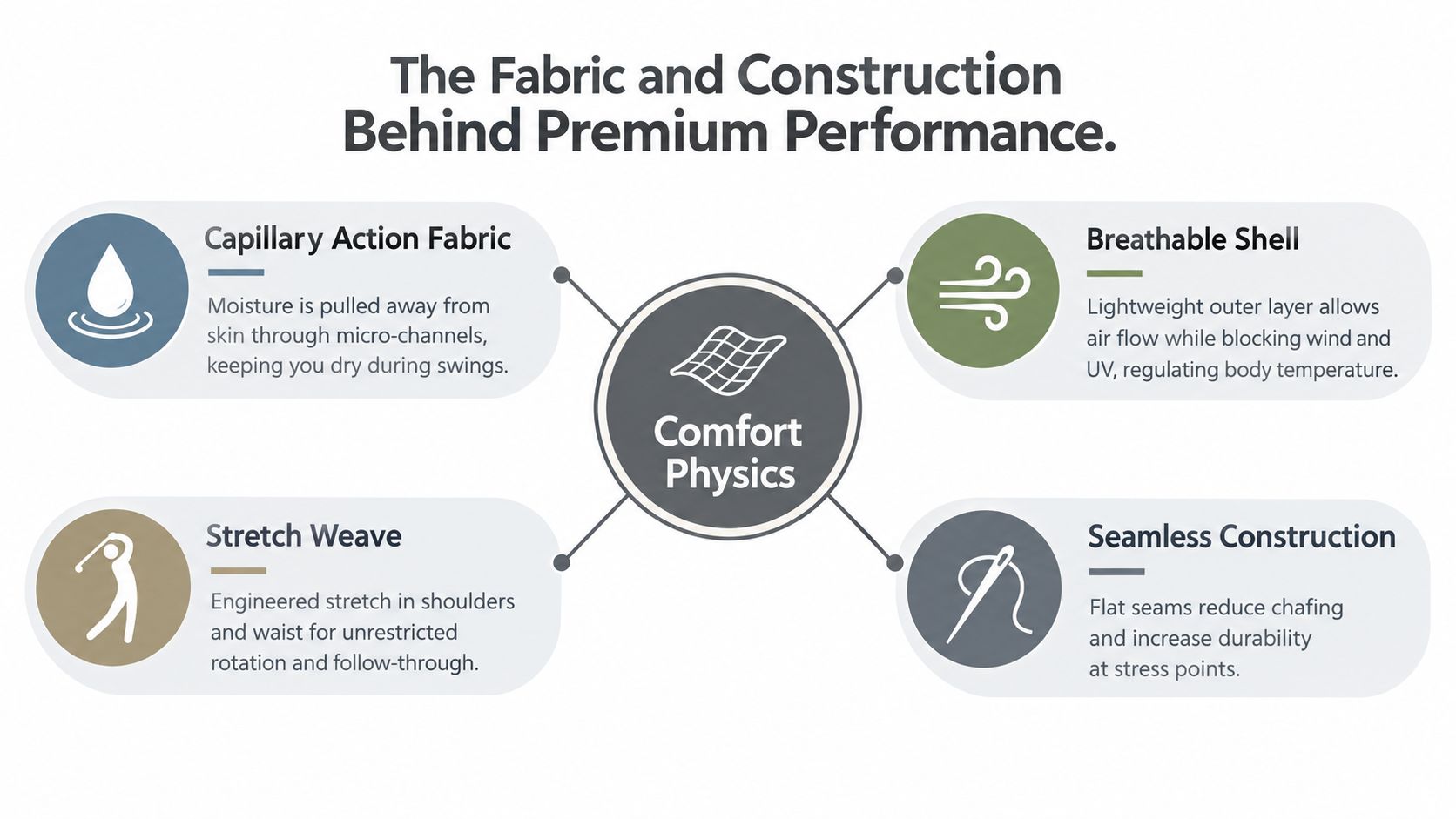
A premium golf shirt earns its keep the moment the round gets sticky. By the third hole in rising heat, average fabric starts clinging, twisting, and holding sweat like a bad houseguest. Better apparel stays composed because the difference sits in fiber behavior, knit structure, and how the garment is built.
Why polyester-rich blends dominate
High-end men's golf apparel usually starts with polyester or a polyester-rich blend for practical reasons. Polyester absorbs relatively little moisture, and its structure helps move sweat across the fabric so it can evaporate more efficiently. As noted in the Druids fabric guide, that same family of fabrics is also commonly used for strong built-in sun protection, including UPF 50+ options.
The easiest way to understand it is to treat fabric like a cooling system. One shirt traps heat and moisture near the skin. Another spreads that moisture outward, lets air pass through, and dries fast enough that you stop noticing it.
That is what high-end should buy you.
Premium pieces also tend to include elastane, but the story is not raw stretch. It is stretch with recovery. A shirt that gives during the backswing but snaps back into shape after 18 holes will keep its collar, chest, and sleeves looking tidy instead of tired.
For a clearer breakdown of how that process works on the body, 2ndShotMVP explains the mechanics of moisture-wicking fabric.
Comfort comes from fabric physics and construction
Fiber choice is only half the equation. Construction decides whether the fabric can do its job. Knit density, yarn quality, panel shape, and finishing all affect how a shirt releases heat, resists cling, and moves with your swing.
Textile-focused analysis from Leto Golf points to air permeability, water-vapor permeability, and thermal resistance as key properties in heat and moisture transport. In plain English, good golf apparel lets warm air out, lets sweat vapor escape, and avoids that sealed-in feeling around the chest and collar.
Here is the practical filter:
- Moisture transport keeps sweat from sitting on the skin.
- Air permeability helps heat escape before the shirt turns swampy.
- Thermal balance keeps the fabric wearable in changing conditions.
- Recovery and structure help the shirt hold its shape on the course and after it.
A quick visual makes that easier to see.
Construction decides whether performance also looks polished
Two polos can share similar fabric claims, yet one keeps a clean placket, a balanced collar, and a smoother drape after a full day, while the other starts looking rumpled by lunch. Bonded details, stable collars, cleaner seam finishing, and better edge control all help a garment perform as clothing, not just as activewear.
That matters if you want one piece to handle both the first tee and the 19th hole. A shirt with strong fabric but flimsy construction performs like a specialist tool. A shirt with both performs like part of a wardrobe.
Fit belongs in this construction conversation too. Fabric can only do so much if the shoulder sits off, the chest pulls, or the sleeve hangs awkwardly. If you are between sizes or comparing brands, a simple guide on how to take sewing measurements can help you judge whether a polished fit is realistic before you buy.
How to Evaluate Quality Before You Buy
You are standing in a fitting room with two polos that look nearly identical on the hanger. One costs more. The question is not whether the logo feels fancier. It is whether the shirt works as a better system: cooler under pressure, cleaner in shape, and easier to wear after the round without looking like you forgot to change.
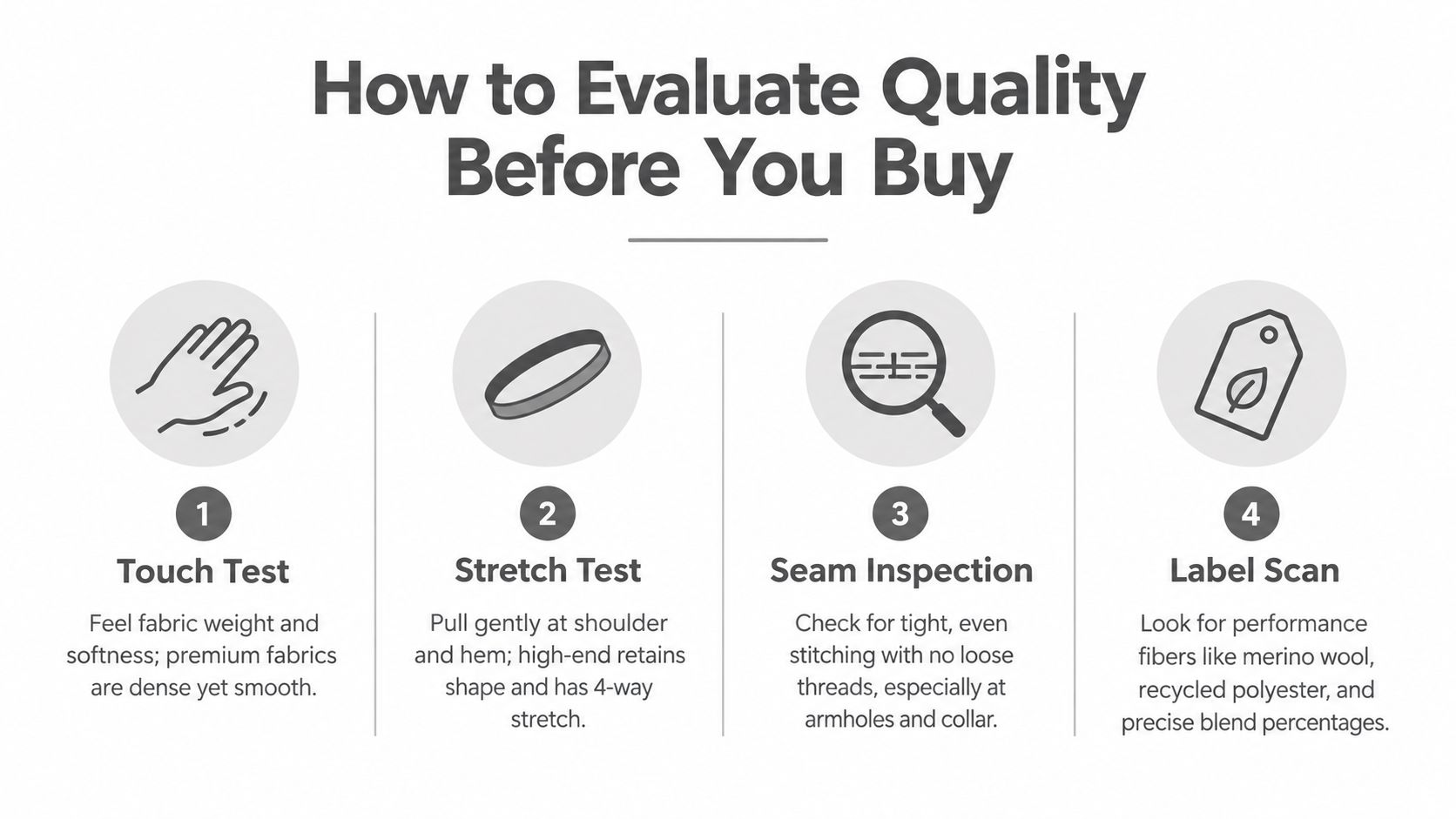
What to do in a fitting room
Start by judging control.
Good golf fabric should feel composed in your hands, the way a well-struck iron shot feels composed off the face. It does not need to be heavy, but it should feel stable rather than papery, slippery, or coated with fake shine. Premium pieces usually manage three things at once: they move, they recover, and they keep a tidy surface.
Then run a quick four-part check:
- Pinch the collar and release it. A well-made collar returns to shape and keeps a clean line. A weak one folds in on itself and starts looking tired fast.
- Stretch the side body or sleeve lightly. You want clean recovery. If the fabric stays rippled or bags out, it will only get worse with wear and washing.
- Check the seams where stress shows first. Look at the armholes, placket, side vents, and hem. Neat stitching, flat joins, and edges that sit calmly usually signal better construction.
- Hold the fabric to the light. You are checking for even knit structure. Patchy density or irregular texture can hint at a less refined fabric.
Put it on, then move like a golfer.
Raise your arms. Rotate through a slow backswing. Sit down if there is a bench nearby. A shirt can feel fine standing still and turn awkward the moment your shoulders work. High-end apparel earns its keep by staying neat while your body is in motion, then still looking presentable once the motion stops.
What to read online without getting duped
Online, quality hides in specificity. Vague copy sells mood. Useful copy explains what the garment is built to do and how it is built to do it.
A practical filter looks like this:
| If the description says | What it might mean | Better sign |
|---|---|---|
| Performance fabric | Marketing fog | Specific mention of moisture management, breathability, stretch, or sun protection |
| Athletic fit | Unclear shape | Notes on shoulders, chest, sleeve length, and body taper |
| Premium feel | A styling promise | Details on knit type, collar construction, placket finish, or seam work |
| Versatile style | Brand opinion | Photos and design cues that show the piece works with tailored trousers or casual layers off course |
Fiber content matters too, but only as part of the whole picture. The same blend can behave very differently depending on knit, finish, and construction. Recipe and cooking both count.
The two-question filter that saves money
Before you buy, ask:
- Will this help me stay comfortable through a full round in real conditions?
- Will this still look right when I head inside for lunch or a drink after?
That is the useful definition of high-end. On-course performance plus 19th-hole wearability.
A shirt that only performs is sports kit. A shirt that only looks polished is costume. The better buy handles both jobs without fuss.
If you cannot identify the fabric, construction, or versatility advantage, the higher price has not proved itself yet.
Styling High End Looks From Tee to 19th Hole
You finish a morning round, head straight to lunch, and never feel the need to change. That is the styling test. High-end golf dressing works when your outfit reads sharp at address, relaxed on the patio, and intentional in both places.
The mistake is treating style like decoration. On good golf clothes, style is the visible result of a system: fabric with enough structure to hold its line, construction clean enough to avoid bulk, and colors calm enough to travel beyond the course. Price alone cannot do that. A loud logo cannot do it either.
Build the outfit from the shirt outward
Start with the piece closest to the job. The polo or knit top sets the tone because it controls drape near the shoulders, collar, and chest, which is where cheap clothing often gives itself away first. A soft technical polo with a crisp collar works like good architecture. If the frame is right, the rest of the room is easier to furnish.
Then match the trouser to the shirt's personality. Smooth trousers steady a more technical top. A textured knit polo can carry slightly more relaxed trousers, as long as the line still looks clean.
Three combinations rarely miss:
- Warm weather: knit polo, tapered golf trouser, leather belt, structured cap
- Cool morning: performance polo, lightweight layer, trim trouser, simple cap, clean golf shoes
- Transitional day: long-sleeve polo or fine-gauge layer, understated outer layer, tapered trouser you would still wear to lunch
The goal is balance. If every piece screams sport, the outfit starts to look like equipment. If every piece looks too precious, you lose the ease golf clothes should have.
Headwear should finish the look, not interrupt it
Caps behave like punctuation. The right one ends the sentence cleanly. The wrong one changes the meaning halfway through.
Shape matters more than novelty. A structured crown, tidy embroidery, and a color that belongs with the shirt and trouser will usually age better than a cap chosen for one joke or one loud graphic. If you are comparing options for events, teams, or wardrobe planning, this guide to custom golf cap assortment planning gives a useful overview of the main cap formats golfers tend to rotate through.
For broader outfit ideas, 2ndShotMVP's guide to stylish golf apparel is a helpful reference for dressing with both course time and post-round wear in mind.
Keep the palette steady so the textures can speak
High-end style often looks quieter because the interest sits in surface and shape, not just color. A mercerized knit, a matte trouser, or a refined quarter-zip does more work when the palette stays controlled.
Try these pairings:
- Navy and stone: polished without looking stiff
- Grey and white: clean in heat, easy under layers
- Olive and charcoal: strong in cooler months, less predictable than black
- Muted blue and tan: classic without feeling dated
One practical filter helps here. Ask whether the outfit would still make sense if you took the glove and tee out of your pocket. If the answer is yes, you have probably found the sweet spot between performance and 19th-hole wearability.
The best golf outfit looks ready for golf and the rest of the day. That quiet flexibility is what makes it feel high-end.
Fit Sizing and Care That Protects Your Investment
You feel the difference the first time you wear a premium polo for 18 holes. The collar sits properly at the first tee, the shirt moves with your swing on the sixth, and it still looks presentable when you grab a drink after the round. That kind of range comes from two things working together. Fit and care.
High-end golf apparel works like a well-built club. Good materials help, but the final result depends on setup. A fine fabric in the wrong cut will fight you. A great-fitting quarter-zip washed with too much heat will lose its shape long before it should.
Fit checks that matter
Start with movement, not the size tag. Brand sizing shifts more than golfers expect, especially once stretch fabrics and different cuts enter the picture.
For polos and performance tops, check the shoulder first. The seam should sit close to the edge of your shoulder so the shirt can rotate with your swing instead of dragging across your upper back. Then look at the chest and midsection. The placket should lie flat, and the body should follow your frame cleanly without pulling or ballooning when you bend to read a putt.
A quick try-on checklist helps:
- Shoulders: make a slow practice swing. You want range of motion without the shirt climbing or binding.
- Chest and midsection: no pulling at the buttons, no extra fabric puffing out.
- Hem: bend and squat slightly. It should stay neat rather than riding up or flaring out.
- Sleeves: finished-looking, but not tight enough to pinch the arm.
Trousers need the same practical test. Focus on how the fabric falls through the seat and thigh, then check what happens when you walk, crouch, and rotate. Premium trousers should look clean standing still and feel unremarkable in motion, which is a compliment. The best pair disappears while you play and reappears only when someone notices you still look sharp afterward.
Fitted versus athletic cut
Fit labels cause confusion because brands use the same words for different shapes. A simpler filter is to match the cut to your real use case, not your idealized one.
| Fit label | Usually feels like | Best for |
|---|---|---|
| Fitted | Cleaner through waist and sleeve | Golfers who want a sharper look after the round |
| Athletic | More room in chest, shoulders, and seat with easy movement | Golfers who prioritize mobility and all-day comfort |
| Relaxed | Easier all over | Golfers who prefer a looser silhouette |
If you split time evenly between the course and the clubhouse, choose the piece that holds its shape well enough to pass both tests. That is the useful high-end filter. Does it perform during the swing, and does it still look intentional with regular shoes and no glove in sight?
Care that preserves shape and finish
Care is fabric physics in plain clothes. Heat, friction, and overwashing are what wear premium garments out, not some mysterious curse that only strikes expensive polos.
Wash less often when the piece is only lightly worn. Use a gentle cycle, mild detergent, and cold water unless the label says otherwise. High heat is usually the villain, especially for collars, bonded trims, stretch fibers, and soft hand-feels that made the garment appealing in the first place.
A few habits make a real difference:
- Turn garments inside out to reduce surface abrasion
- Zip layers before washing so trims do not scrape softer fabrics
- Skip overloaded machines because compression and rubbing rough up the face of the fabric
- Air dry when possible or use low heat to protect stretch and shape
- Store with purpose by folding knits and hanging structured layers
Merino, cashmere blends, and very soft performance jerseys ask for more patience. Technical synthetics are easier, but they are not indestructible. Treat premium apparel like performance equipment, not laundry you happen to wear, and it will keep doing both jobs better.
Price Value and Smart Shopping With 2ndShotMVP
You are standing in front of two polos. One costs much less. The other asks premium money. The smart call is not about the logo on the chest. It is about whether the garment solves more problems every time you wear it.
That is the useful way to price high-end golf apparel. Treat it like a system of fabric behavior, construction quality, and range of use. A shirt that manages heat, keeps its collar clean, and still looks sharp over lunch can replace several weaker options in your closet. Cost-per-wear starts to look very different once one piece handles the tee box, the airport, and dinner without looking like it got lost on the way.
Broader market research points in the same direction. Analysts at Mordor Intelligence describe a growing golf apparel market, and that matters because growth usually brings more noise along with more choice. More brands, more marketing, more “premium” labels. Your job is to separate expensive from well built.
A simple value filter
Before buying, run each piece through three checks:
- Performance: Does the fabric help with temperature control, movement, and long hours of wear?
- Construction: Do the collar, placket, seams, and recovery look built to stay tidy after repeated washes?
- Versatility: Would you wear it off the course with confidence, or does it only work with golf shoes and a glove?
If it passes all three, the price has a case. If it passes only one, you are paying for a fancy receipt.
A useful comparison helps here. Premium polos and layers work like a well-designed travel jacket. The value is not in one dramatic feature. It is in how many small jobs the piece handles without fuss. For shoppers weighing where to spend and where to save, this guide to discount golf apparel for men is a practical reference point.
2ndShotMVP also offers golf hats and lifestyle apparel built for wear on and off the course, including pieces made with breathable, moisture-wicking materials. That kind of crossover matters. Accessories and casual staples often deliver strong value because they get used in more settings than a highly specific tournament shirt.
Spend first on the items that control comfort, drape, and repeat wear. Save on the pieces that do not change how you feel or how pulled together you look.

