

Most advice on golf shirt vs polo is lazy. People say they're the same shirt, one just sounds sportier. That's wrong.
They share the same family tree. They do not do the same job.
A classic polo is a casual staple that happens to look tidy. A golf shirt is a collared performance piece that happens to look civilized enough for lunch after the round. If you care about playing comfortably, looking sharp, and not feeling like you're wearing a damp bath towel by the turn, the distinction matters.
Here's the quick version before we get into the weeds.
| Feature | Golf Shirt | Classic Polo |
|---|---|---|
| Main purpose | On-course performance | Casual and smart-casual wear |
| Typical fabric | Polyester blends, often with stretch | Cotton or cotton blends |
| Sweat handling | Pulls moisture away and dries fast | Absorbs moisture and holds it |
| Fit | Athletic, movement-friendly | Regular, roomier, more relaxed |
| Collar | Structured to stay flat and upright | Softer, more likely to roll |
| Best use | Golf, heat, travel, active days | Office casual, dinner, weekends |
| Style vibe | Technical, polished, sporty | Timeless, classic, easygoing |
The Great Polo Impostor
The biggest myth in golf apparel is that a golf shirt is just a polo with better PR.
Nope. A golf shirt is the specialized descendant of the polo. Same visible bones. Completely different mission.
That shared DNA goes back to 1926, when René Lacoste created the modern polo shirt with a short sleeve, unstarched collar, and buttoned placket to replace the stiff tennis whites players wore before. He also gave it a longer back hem so it stayed tucked during movement, which is one reason the shirt became such a practical breakthrough in the first place, as noted in this history of the polo shirt and golf shirt lineage.
Same roots, different evolution
The original polo solved a sports problem. Then it got adopted by the wider world because it looked clean without feeling formal. By the 1930s, it had become a global style staple. That's where the confusion started.
Once a shirt moves from sport into everyday life, people stop noticing why it was designed the way it was. They see a collar and a placket and think that's the whole story.
It isn't.
A classic polo went on to become the king of barbecues, casual Fridays, and “I want to look presentable but not like I'm trying too hard.” The golf shirt took the same template and kept evolving toward movement, sweat management, sun exposure, and long hours outdoors.
The collar and placket are the family resemblance. The fabric, fit, and construction tell you which shirt is built for actual golf.
Why this mix-up matters
If you only care about passing a dress code, the two can look interchangeable from ten feet away. If you care about comfort on the course and versatility off it, they're not interchangeable at all.
A cotton polo can look terrific at the clubhouse. A modern golf shirt can handle the course, the patio, the airport, and a casual meeting without blinking. That's why this debate shouldn't be framed as fashion versus function. The right shirt gives you both.
Anatomy of a Classic Polo Shirt
A classic polo has earned its place. Let's give it some respect before we start poking holes in it.
This is the shirt you grab for a summer dinner, a casual office day, or a backyard gathering where a T-shirt feels too sloppy and a button-down feels like overkill. It's familiar for a reason. The thing works.
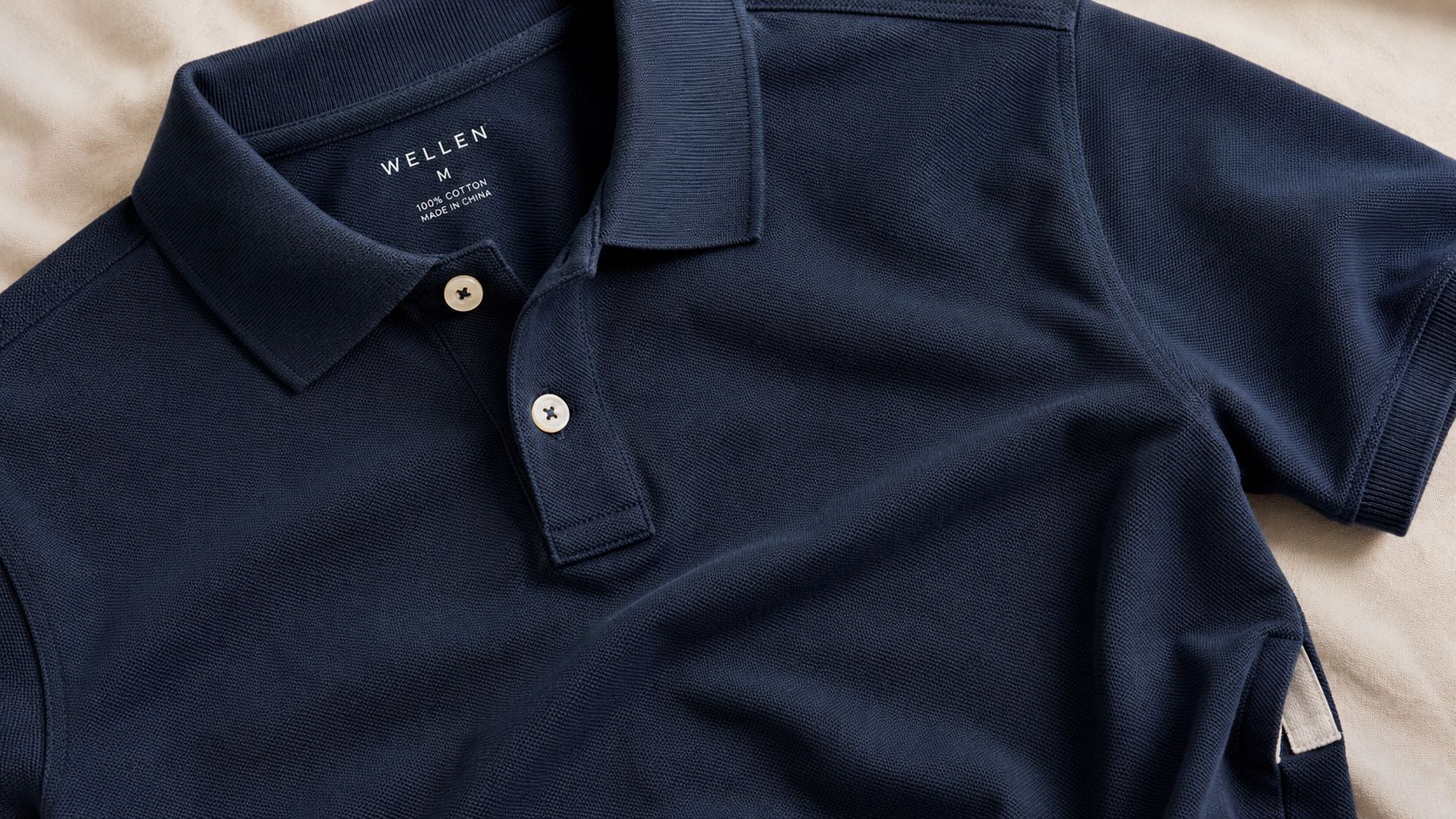
What makes a polo a polo
The classic formula is simple.
- Cotton-first feel: Traditional polos usually lean on cotton or cotton blends. That's why they feel soft, substantial, and easy to wear.
- Relaxed shape: They often have a more forgiving body and a less technical shoulder cut.
- Soft collar attitude: The collar is part of the look, not a performance feature. It's there to frame the neckline and clean up the silhouette.
That's why the best classic polos feel effortless. They're not trying to help you rotate through impact. They're trying to make you look put together without fuss.
If you want a broader look at modern collared options built for golfers, this guide to men's golf shirts is a useful companion.
Where the classic polo shines
A traditional polo is great when your day is mostly static. Sitting, standing, strolling, maybe carrying a drink, definitely not chasing a tee shot into knee-high rough.
It wins in settings like these:
| Situation | Why a classic polo works |
|---|---|
| Casual office | Clean and familiar |
| Dinner or drinks | Soft texture feels refined |
| Weekend errands | Comfortable without looking lazy |
| Cooler weather | Cotton can feel pleasant and natural |
Where it starts to lose the plot
Cotton feels terrific right up until the moment you sweat in it.
Then it becomes clingy, heavier, and less breathable. That's fine if you're walking from the car to a restaurant. It's less charming when you've got a glove on, the sun overhead, and another nine holes to play.
Practical rule: A classic polo is a style shirt first. If your day involves heat, motion, and hours outside, you're asking it to do a job it wasn't built for.
That doesn't make the polo bad. It makes it honest. It's a casual staple, not a performance miracle. The mistake is expecting it to behave like athletic equipment because it happens to have a collar.
The Golf Shirt as Performance Equipment
A golf shirt earns its place the same way a good glove or a decent pair of shoes does. It helps you play better, stay comfortable longer, and look like you knew what you were doing before you even pulled a club.
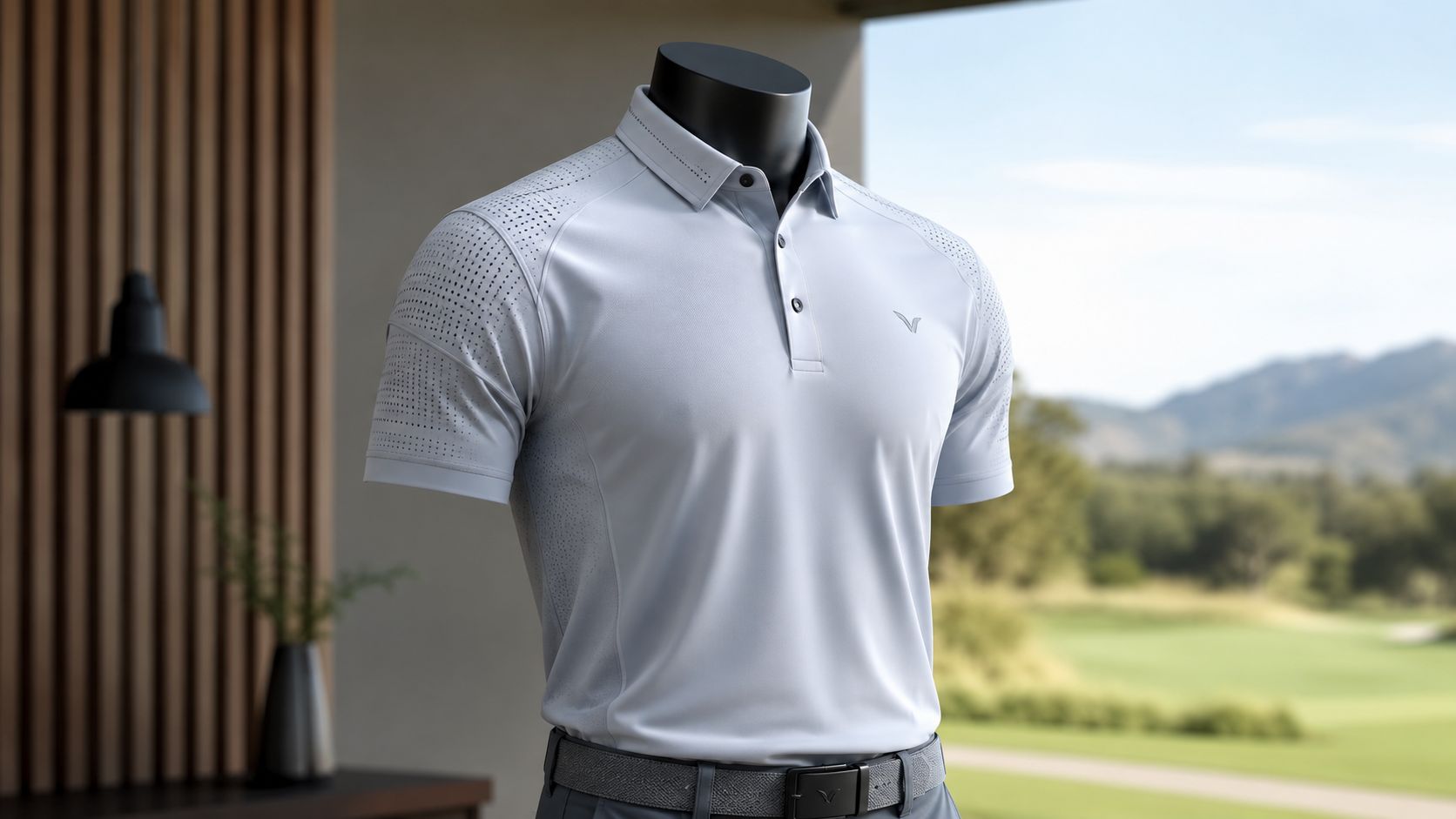
The difference shows up after a few holes, not on the hanger. A proper golf shirt manages sweat, keeps its shape through a full round, and moves with your body instead of bunching across your shoulders and chest. That matters on the course. It also matters when you head straight from the 18th green to lunch and do not want to look rumpled and cooked.
The fabric does the heavy lifting
Modern golf shirts rely on synthetic performance fabrics because they solve real problems. Polyester blends dry faster, hold less moisture, and stay lighter once the temperature climbs.
According to this breakdown of golf shirt performance fabric, modern golf shirts are designed to move moisture away from the body faster than standard cotton polos. The same source notes that many also include UPF protection and anti-odor treatments.
That is the point. The best golf shirt works as wearable equipment, then passes as a sharp casual shirt once the round is over.
If you want the plain-English version of why that matters, this explainer on how moisture-wicking fabric works cuts through the jargon.
Why stretch matters more than you might assume
Golf is full of repeated, awkward movement. Turn hard. Reach. Bend. Walk. Do it again for four hours.
A shirt with mechanical stretch or a touch of elastane handles that workload far better than a traditional cotton polo. The benefit is not just comfort. It is cleaner movement through the shoulders, less pulling across the back, and less need to tug the shirt back into place after every swing.
And here is the style angle golfers miss. A shirt that keeps its shape reads better off the course too. It sits cleaner under a quarter-zip, travels better, and looks intentional with chinos or well-fitting shorts instead of screaming, "I just left the range."
Good golf shirts solve boring problems before they annoy you
The best ones stay out of the way.
You notice the bad shirt. The sticky one. The one with a collar that folds like wet cardboard by hole ten. The one that looks presentable for twenty minutes, then starts clinging to your back the second the sun shows up.
Here's a quick visual if you want to see the concept in action:
A proper golf shirt earns its keep in three areas:
- Moisture control: It pulls sweat off your skin so the shirt dries instead of turning swampy.
- Mobility: Stretch and smarter patterning stop the fabric from fighting your swing.
- Sun readiness: Built-in UV protection helps when a quick round turns into an all-day march.
My advice is simple. If you play with any regularity, default to a golf shirt over a standard polo. Then choose one that does not look too sporty to wear for the rest of the day. That is where the modern golfer wins. Performance on the course, clean style after it.
Head-to-Head Differences That Actually Matter
The argument gets easy. Stop looking at the collar from across the room and start looking at what the shirt does.
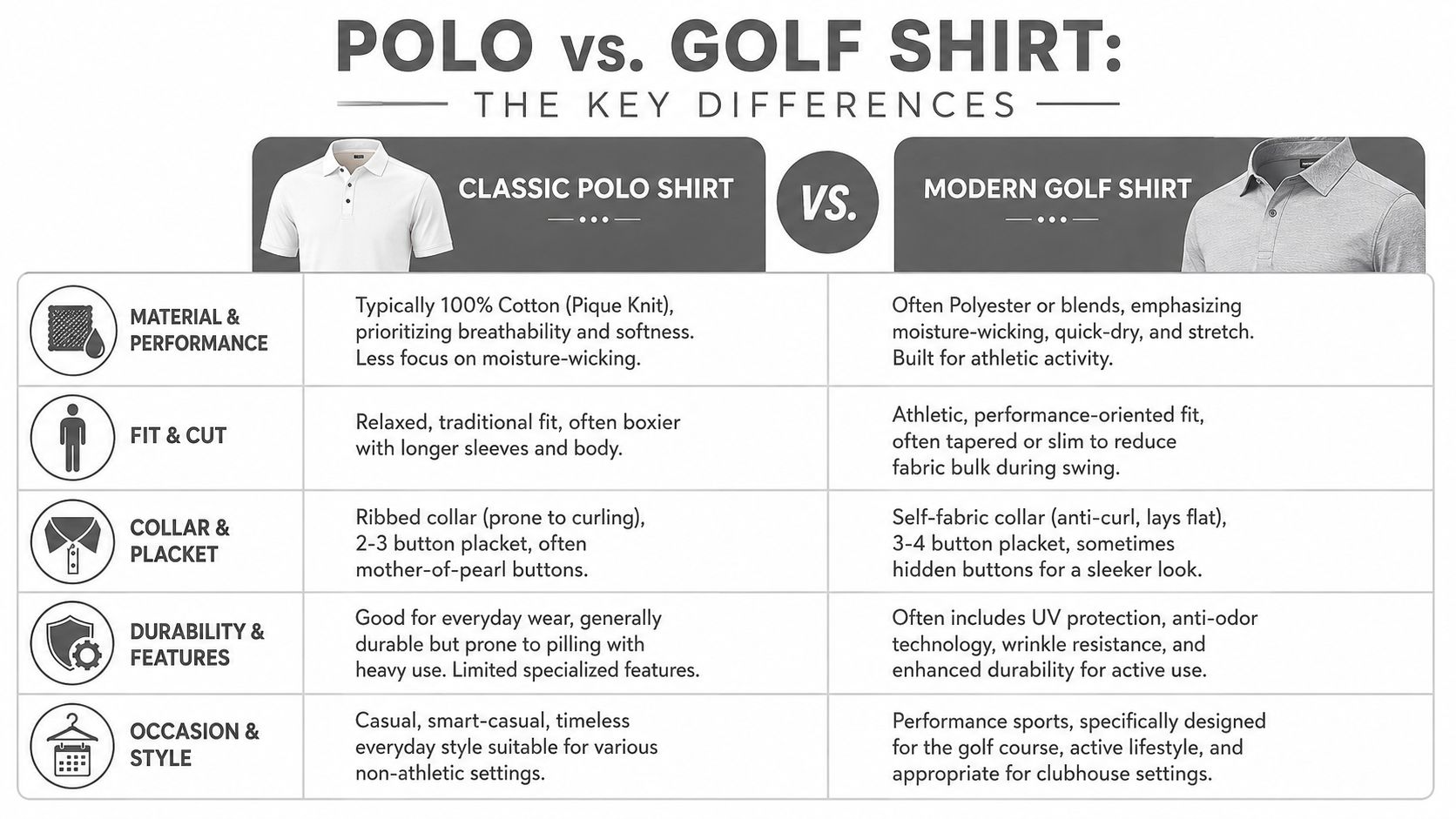
| Feature | Golf Shirt (Performance Equipment) | Classic Polo (Casual Staple) |
|---|---|---|
| Fabric | Polyester blends, often with stretch | Cotton or cotton blends |
| Sweat behavior | Wicks and dries quickly | Absorbs and holds moisture |
| Fit | Athletic, built for movement | Boxier, built for comfort |
| Arm mobility | Roomier where motion needs it | Can feel restrictive in swing |
| Collar | Structured, flat-laying | Softer, more likely to roll |
| Best environment | Course, heat, travel, active days | Casual wear, office, dinner |
| Extra features | UV protection, odor control, wrinkle resistance | Usually minimal technical features |
Material and performance
The fabric split is the big one. Golf shirts are usually synthetic because they're supposed to perform, not just look decent on a hanger.
Classic polos usually prioritize softness and familiarity. That's fine off the course. On the course, it's a compromise.
If you're choosing a shirt for activity, fabric is not a side detail. Fabric is the whole game.
Fit and mobility
A golf swing exposes bad fit fast. If the shirt binds across the shoulders or pinches at the armhole, you'll know before you finish your warm-up bucket.
According to this explanation of golf polo construction, golf shirts use a double-stitched, flat-laying collar built to stay upright during high-torque swings. That source also notes that golf shirts tend to use an athletic fit with tight tolerances for shoulder mobility, while standard polos often lean boxier.
That's a subtle difference until you wear both on the same day. Then it's not subtle at all.
Collar and detail work
This gets overlooked, but it matters. A golf shirt's collar is engineered to behave. A classic polo collar is mostly decorative.
Here's what separates them:
- Golf shirt collar: Structured, flatter, cleaner under motion.
- Classic polo collar: Softer, more relaxed, more likely to curl or roll.
- Placket impression: Golf shirts often look a bit sharper because the front stays neater through the day.
A collapsed collar can make an expensive shirt look cheap in a hurry.
Which one wins
Neither wins every category. That's not the point.
A classic polo wins when you want softness, easy casual style, and zero concern about athletic performance. A golf shirt wins when your day includes movement, weather, sweat, or any chance you'll need the shirt to do more than pose politely.
For most modern golfers, that means the golf shirt is the smarter buy. The trick is choosing one that doesn't scream “I just left the pro shop.”
Styling for the Course and the Clubhouse
Plenty of golfers still dress like they have to choose. Performance for the course, style for everything after. That's outdated.
The right golf shirt should handle both jobs without looking like a piece of workout gear that wandered into lunch.
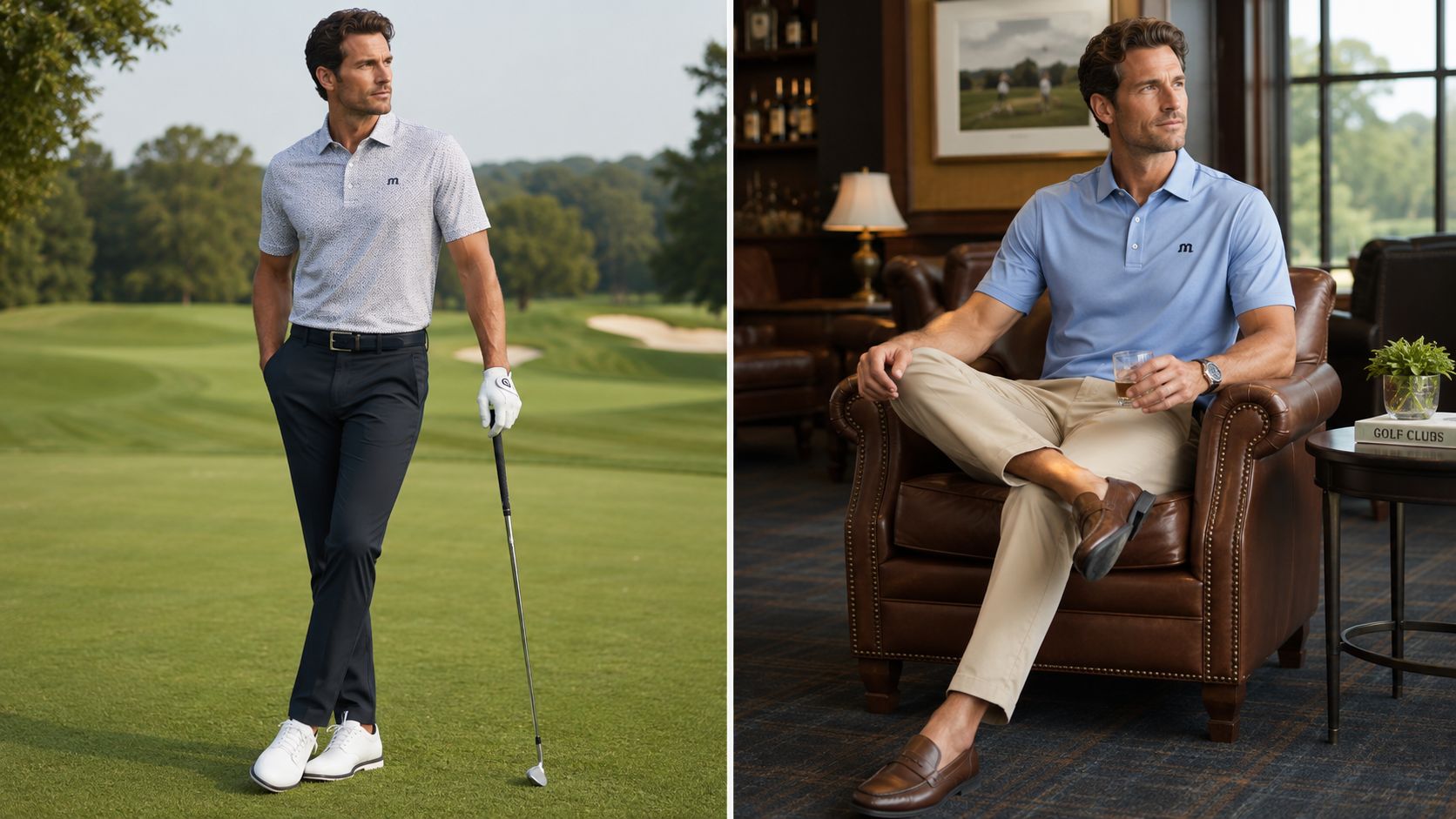
A shirt that plays well but looks overly slick, shiny, or logo-stamped misses the point. So does a soft casual polo that looks great at the bar and falls apart by the back nine. Modern golfers need one shirt that works as equipment and still passes as real clothing off the course.
Dress for the whole day
Start with the setting, not the fabric label.
If you're playing a morning round and heading straight to the clubhouse, wear a golf shirt in a solid color or restrained pattern. Navy, white, olive, slate, dusty blue. Those shades look sharp with well-fitting shorts or clean trousers and don't scream “pro shop clearance rack.”
Fit decides whether the shirt looks expensive or forgettable. You want room to move through the shoulders and chest, but the body should stay neat. Extra fabric bunching around the waist makes even a good shirt look sloppy.
The same rule applies off the course. A golf shirt earns its keep when it works under a quarter-zip, with chinos, or with five-pocket pants and clean sneakers. If you need a broader read on where golf clothing crosses into everyday wear, this guide to proper golf attire covers the basics well.
What actually looks good
A lot of golf style advice is nonsense, so keep it simple:
- Pick matte fabrics over shiny ones: Performance is good. Synthetic glare is not.
- Keep branding quiet: A small chest logo is fine. Three giant logos make you look sponsored by poor judgment.
- Choose patterns with restraint: Micro-prints, narrow stripes, and subtle texture travel well from tee box to patio.
- Match the shirt to the rest of the outfit: Clean belt, clean shoes, clean lines. The shirt cannot save chaotic styling.
- Tuck based on the venue: Tucked for private clubs and sharper settings. Untucked works if the hem is designed for it and the setting is relaxed.
Three style plays that rarely miss
Tee time, then lunch
Wear a fitted golf shirt in a muted solid or small pattern with flat-front shorts. Change out of spiked shoes before you sit down. Keep the shirt on. That's the whole advantage.
Office first, nine holes later
Choose a golf shirt that looks closer to a polished polo than a training top. Pair it with lightweight trousers in charcoal, stone, or navy. You'll look appropriate at your desk and sensible on the first tee.
Weekend travel
Golf shirts are excellent travel pieces because they resist wrinkles, dry quickly, and stay presentable after a long day. Pick one that does not advertise itself as “technical” from across the airport terminal.
The best golf shirt never begs for attention. It just keeps you looking sorted in more places than a standard polo can.
That's the target. Buy the shirt that can survive sweat, sunlight, a clubhouse lunch, and a grocery stop on the way home without making you look like you're still chasing range balls.
Decoding the Unspoken Dress Code
Golf dress codes aren't really about the collar. They're about whether you look like you understand where you are.
That's why the guy in a rumpled, sweat-heavy cotton polo can be technically compliant and still look out of place. He followed the letter of the rule. He missed the spirit of it.
What courses actually care about
Most places want a collared shirt because it signals basic effort. It says you didn't roll out of bed and wander onto the first tee in gym clothes.
But the smarter read is this. Courses also care how that shirt carries itself through the day. A proper golf shirt holds shape, handles weather, and looks intentional from the first hole to the final putt.
According to this piece on golf shirt and polo dress code nuance, many course marshals accept a polo on paper but may side-eye a heavy cotton shirt on hot days because the functional gap becomes obvious fast.
Why that matters
This isn't about being stuffy. It's about reading the room.
At a municipal track, you've got more leeway. At a private club, details matter more. In both places, a modern golf shirt tells people you dressed for the game, not just for the technicality of a rule.
If you want a broader take on expectations beyond the shirt itself, this guide to proper golf attire is worth your time.
Wear the kind of shirt that still looks respectable after a long walk in the sun. That's usually the right answer.
The practical takeaway
If the dress code says collared shirt required, don't stop at “good enough.” Wear the shirt that belongs on a golf course.
That means a proper golf shirt for most rounds. Save the classic cotton polo for dinner, the office, and the sort of casual day where your biggest athletic effort is reaching for another drink.
Choosing Your Perfect Shirt A Buyer's Guide
Here's my blunt buying advice. Don't shop by label. Shop by job.
If you're playing often, walking in heat, or spending full days outdoors, buy a golf shirt. Not a “lifestyle polo that should be fine.” A real golf shirt. The performance benefits are too obvious once you've worn one properly.
The easy cheat sheet
- Weekend warrior: Prioritize moisture control, stretch, and a collar that stays put. You need function first.
- Style-conscious executive: Buy golf shirts that look restrained enough for lunch, travel, and casual work settings. Clean colors beat gimmicks.
- Traditionalist: If you love the feel of cotton, keep classic polos in your rotation for off-course wear. Just don't confuse preference with performance.
What to look for before you buy
Some golfers also need shirts for team events, corporate outings, or branded club apparel. In that case, it helps to look at options for high-quality custom polo shirts that still keep the finish polished rather than turning everyone into a walking billboard.
Use this simple filter:
- Feel the fabric. If it feels heavy before you even move, skip it.
- Check the collar. A floppy collar ruins the whole shirt.
- Test the shoulder area. Raise your arms. Rotate a little. If it binds now, it'll annoy you later.
- Evaluate versatility objectively. Ask whether you'd wear it after the round. If not, it's probably too loud or too synthetic-looking.
My opinion is simple. For modern golfers who want one shirt to handle the course and the rest of the day, the golf shirt is the better buy. A classic polo still deserves closet space. It just shouldn't be your first pick for actual golf unless comfort in motion doesn't matter to you.
If you want golf style that carries the same on-course and off-course confidence, take a look at 2ndShotMVP for premium golf hats, beanies, and lifestyle gear built for players who like their apparel the same way they like their game. Sharp, fun, and ready for more than one setting.

