

Let's be honest, your mallet putter isn't just another stick in the bag. It's your money-maker, the precision tool you rely on to seal the deal on the green. Leaving it unprotected is like tossing your brand-new smartphone into a toolbox and hoping for the best.
A dedicated mallet putter head cover isn't a luxury; it's the single best line of defense against the chaos that happens inside your golf bag.
Why Your Mallet Putter Needs a Helmet
Think of that high-tech mallet as a serious investment in your short game. With its fancy designs, perfectly balanced weighting, and soft face inserts, it’s a masterpiece of engineering. But all that tech makes it surprisingly fragile.
Every step you take, every bump in the golf cart—your clubs are clanging together like a rock band's drum solo. Without a cover, your putter's pristine face is going to lose that fight, and those little nicks and dings can mess with its performance.
This is about more than just keeping it pretty. It’s about protecting the technology you paid a premium for. A tiny dent on the face or a scratch across a crucial alignment line can throw off your roll and, even worse, your confidence.
The Real Cost of Going Commando
Skipping a head cover opens the door to a bunch of problems that are completely avoidable, and they can hit you in both your scorecard and your wallet.
Here's a quick look at the threats lurking in your bag.
Quick Guide to Mallet Putter Protection
This table breaks down exactly why that little cover is such a big deal.
| Threat to Your Putter | How a Head Cover Protects It | Potential Cost of Damage |
|---|---|---|
| Dings and Scratches | Acts as a padded shield against the sharp edges of irons and wedges. | Decreased resale value and cosmetic damage that’s impossible to ignore. |
| Weather Damage | Blocks moisture from rain and dew, preventing rust and material breakdown. | A rusty putter head or a peeling grip, leading to costly repairs or replacement. |
| Face Insert Damage | Cushions the delicate polymer or metal inserts that are crucial for feel and roll. | An inconsistent roll and poor performance, forcing you to buy a new putter. |
A simple cover neutralizes these common threats before they can do any real harm.
Given how popular mallets have become, protecting your investment is a no-brainer. The global golf putter market is worth around USD 3.6 billion, and mallets are eating up a huge slice of that pie. It’s no surprise that this boom has also led to a massive demand for accessories like golf mallet putter head covers. If you're curious about the market trends, you can get a deeper dive over at futuremarketinsights.com.
A head cover is the cheapest insurance policy you'll ever buy for your golf game. It's a small, one-time purchase that protects a club often worth hundreds of dollars.
Keeping your putter safe is just one piece of the puzzle. Proper equipment care is one of the foundational golf bag essentials that every player who's serious about their game needs to master.
Decoding Materials for Maximum Putter Protection
Picking the right material for your mallet putter head cover is a bit like choosing the right tires for your car. You wouldn't throw racing slicks on a 4x4 for a muddy trail, right? The same logic applies here. It's all about finding that sweet spot between a killer look, long-lasting durability, and the exact protection your flatstick needs.
Let's dive into the most common materials you'll see out there, so you can pick a winner that keeps your investment safe, both on the course and rattling around in the trunk.
The Classics: Leather and Synthetic Leather
Genuine leather is the OG, the undisputed champion of timeless cool. It has that premium feel and only gets better with age, developing a unique character—a patina—that tells the story of every round you've played. It’s tough and protective, but like a nice pair of leather shoes, it needs a little TLC to handle moisture and stay in top shape.
Then you have synthetic leather, often called PU leather, which is the modern-day hero. It gives you that same high-end look and feel but laughs in the face of water and sun-fading. There's a reason brands like SuperStroke lean on premium synthetic materials for their head covers; it holds up to intricate custom stitching and is a breeze to wipe clean after a dewy morning on the greens.
Modern Fabric Innovations
But it's not just about leather anymore. A few other materials have stormed onto the scene, each with its own special superpower.
- Neoprene: Think of this as a custom-fitted wetsuit for your putter. It’s super lightweight, flexible, and awesome at keeping water out, making it a no-brainer for anyone who plays in rainy or humid conditions.
- Knit: Rocking that classic, old-school vibe (often with a pom-pom on top), knit covers provide a soft, cushioned home for your putter. Their main mission is to fend off all those little nicks and scratches that happen when clubs clank together in your bag.
- Plush/Fur: These are the fun ones! Often designed to look like your favorite animal or cartoon character, plush materials offer some seriously thick padding. They’re perfect for golfers who want to max out the cushion factor and inject a huge dose of personality into their setup.
Here's the bottom line: your material choice directly affects how long your cover lasts and how well it does its job. A synthetic leather cover is probably the best all-around choice for the weekend warrior who plays rain or shine. But if you're a fair-weather golfer who just wants to stop bag chatter, a classic knit cover might be all you need.
This little flowchart breaks down the decision-making process. It's simple, but it's crucial.
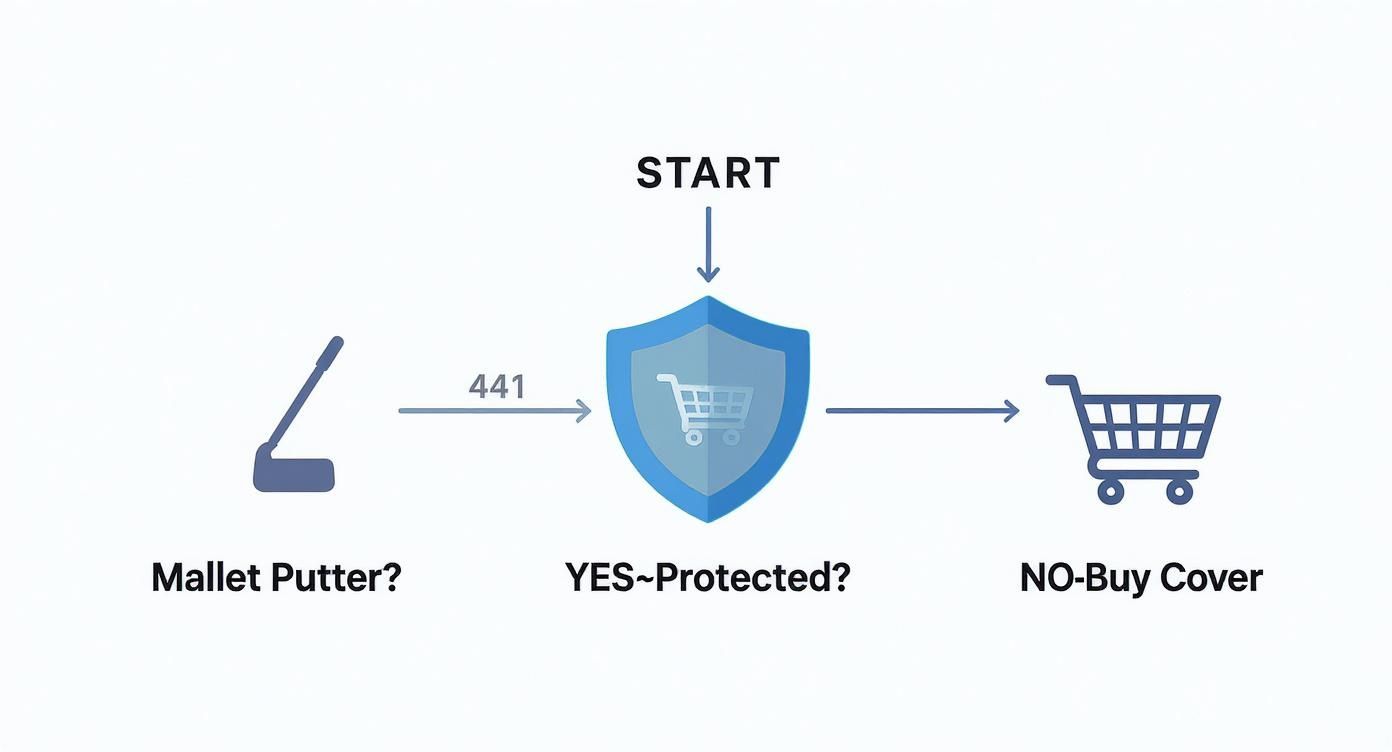
The takeaway here couldn't be clearer: if you've invested in a mallet putter, a head cover isn't just a fun accessory—it's essential equipment. Once you know your materials, you can find a cover that not only looks awesome but also provides the right defense for the most important club in your bag.
The Great Debate: Magnetic vs. Velcro Closures
When it comes to keeping your mallet putter head cover locked down, you’ve got two main contenders. This isn't just a minor detail; it genuinely affects your rhythm and flow on the course. Let's dive into one of golf's most practical arguments: the sleek, silent magnetic closure versus the classic, grippy Velcro.
Think of a magnetic closure as the satisfying thunk of a luxury car door. It’s smooth, fast, and feels effortlessly premium. The magnets practically find each other, making for a slick one-handed operation as you walk up to the green. No noise, no fighting with it—just a seamless transition from protected to ready-to-roll.
Then you have the old faithful: Velcro. This is the workhorse of the head cover world. It offers a secure, reassuring grip that you can absolutely count on. When that hook-and-loop is cinched down, you know for a fact that cover isn't going anywhere, even if your golf cart takes an unexpected detour through the rough.
The On-Course Experience
Picture this: you're standing over a critical ten-foot putt to save par. With a magnetic cover, you flick it off with one hand and let it drop. The silence is golden, ensuring you don't break the concentration of your playing partners. It’s the perfect choice for golfers who appreciate quiet convenience and a touch of class in their pre-putt routine.
Now, imagine that same putt, but with Velcro. You're met with that unmistakable rrrriiiip! sound. While there's no questioning its security, that noise can be a bit of a mood-killer on a silent green. Over time, Velcro can also lose some of its mojo, collecting grass and debris, and it has a nasty habit of snagging on your fancy knit head covers or the lining of your bag.
Your choice really comes down to personal rhythm. Are you all about the stealth and speed of magnets, or do you prefer the loud-and-proud security of Velcro?
Head Cover Closure Comparison: Magnetic vs. Velcro
To make the right call, you have to weigh what matters most to you during a round. Is it speed and silence, or is it iron-clad security? This table breaks it down.
| Feature | Magnetic Closure | Velcro Closure |
|---|---|---|
| Convenience | The undisputed champ of quick, one-handed use. | Reliable, but often needs two hands to open and close. |
| Noise Level | Virtually silent. Your playing partners will thank you. | Can be loud and distracting, especially on a quiet green. |
| Durability | Built to last. Magnets don't really wear out. | Can lose its grip over time and loves to collect debris. |
| Security | Strong enough for almost any situation. | The Fort Knox of closures. It's not opening by accident. |
At the end of the day, both closure types get the job done. They’ll both keep your prized mallet putter safe from dings and scratches. High-end brands tend to lean into the premium feel of magnets, but countless golfers swear by the rugged, no-nonsense reliability of Velcro.
So, ask yourself how you operate on the course. Are you a grab-and-go player who values quick access? Or do you want the peace of mind that comes with a head cover that's locked down tighter than a drum?
Finding the Perfect Fit for Your Putter
Let's be honest, a poorly fitting head cover is about as useful as a screen door on a submarine. If it's too loose, you'll spend half your round backtracking down the fairway to retrieve it. If it’s too tight, you'll be wrestling with it on every green, turning a simple motion into a pre-putt battle of wills.
You're looking for that "Goldilocks" fit—snug enough to stay put over bumps and jostles in the golf cart, but loose enough that you can slip it on and off with one hand. It should feel like a firm handshake, not a death grip.
Sizing Up Your Mallet
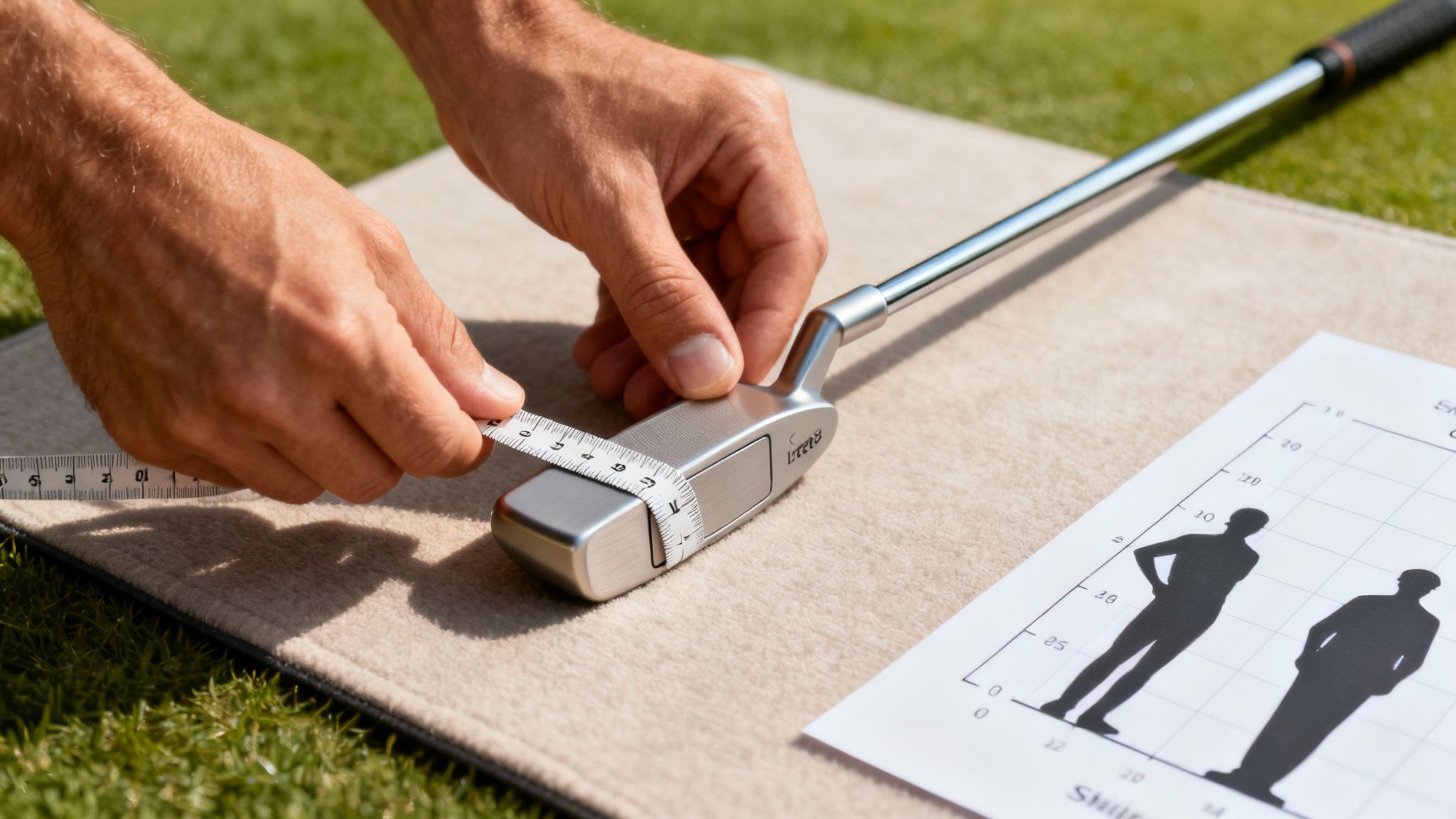
Before you even think about clicking "add to cart," grab a ruler. A quick measurement now will save you the headache of a return later. No complex geometry required, I promise.
- Measure the Width: Lay your ruler across the widest part of the putter face, measuring from the heel to the toe.
- Measure the Depth: Now, measure from the center of the face straight back to the rearmost edge of the mallet.
Jot those two numbers down. They're your key to success. Most reputable head cover brands list their internal dimensions, so you can easily match your putter's size to their specs. This little bit of prep work is the difference between a perfect match and a frustrating miss.
Accounting for Unique Shapes and Shafts
These days, putters come in all sorts of wild shapes. We’ve got "spiders," "fangs," and other high-MOI (Moment of Inertia) designs that look more like futuristic spacecraft than golf clubs. These wild contours mean a generic, one-size-fits-all cover just won't cut it.
Always double-check that a cover is compatible with your specific putter model. A cover made for a TaylorMade Spider has a completely different cut than one for a classic half-moon mallet. The product description is your best friend here.
Don't forget about the shaft, either! The vast majority of head covers are made for standard heel-shafted putters. If you play a center-shafted model, you absolutely need a cover designed with an opening in the middle for the hosel. Trying to jam a standard cover onto a center-shafted putter is a losing game—it'll never close right, leaving your precious flatstick exposed.
Expressing Your Style on the Green
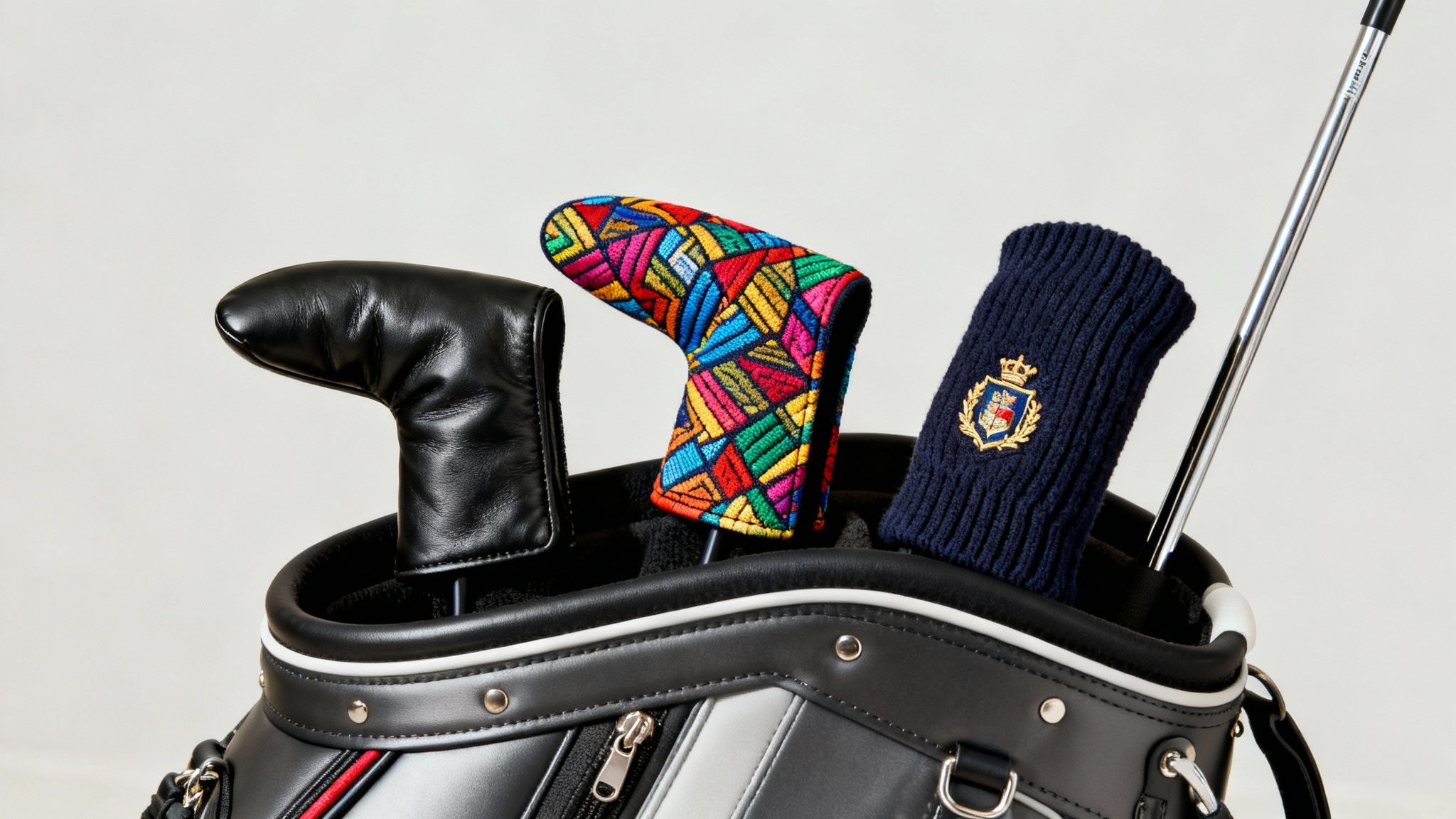
Let’s be honest, the days of golf being a sea of beige and navy are long gone. Your golf bag is now a billboard for your personality, and nothing screams "you" quite like a killer golf mallet putter head cover. It’s a small detail, sure, but it makes a massive statement about who you are on the course.
Think of it as the ultimate accessory—the tie clip or pocket square of your golf outfit. You can keep it classy with a sleek, embroidered leather cover that whispers "I mean business." Or you can go completely off the rails with something that’s loud, proud, and impossible to ignore. The options are wonderfully endless.
From Pop Culture to Custom Creations
The market for cool head covers has absolutely blown up. Seriously. You can find one repping your favorite NFL team, another paying tribute to a cult classic movie, or even one shaped like the questionable hot dog you grab at the turn. Brands are dropping limited-edition collections that create a frenzy, like SuperStroke's "Undead and Under Par" zombie-themed covers, which practically broke the internet among golf gearheads.
And this isn't just a hunch; the numbers back it up. During the thick of golf season, searches for putter head covers went through the roof, showing a staggering 247.88% month-over-month jump. This isn't just about protecting a club anymore. Golfers are actively hunting for gear that lets their personality shine.
Your head cover is a conversation starter. It’s an easy way to break the ice with a new playing partner and show that you don't take yourself too seriously—even when you're grinding over a must-make putt.
Finding Your Signature Look
So, how do you find the one that perfectly captures your vibe? Easy. Just think about what you love when you're not on the course.
- The Sports Fanatic: This is a no-brainer. Grab a cover with your team's logo and colors.
- The Foodie: Is there anything better than a mid-round snack? Put it on your putter. Hot dogs, pizza, tacos—it’s all fair game.
- The Pop Culture Nerd: Let your geek flag fly. Showcase your love for that iconic movie, TV show, or video game.
- The Animal Lover: You can go with a classic tiger or get a little more creative with a shark or even a goofy gorilla.
This one small accessory becomes a huge part of your on-course identity. It's an instant splash of fun. For more inspiration on building out your perfect setup, take a look at our guide to the best golf accessories to round out your bag.
At the end of the day, your mallet putter head cover is a chance to prove you take your style just as seriously as you take sinking that three-footer for par.
Keeping Your Head Cover in Top Condition
Your mallet putter head cover is the unsung hero of your golf bag. It's the bodyguard, taking all the nicks and dings so your prized putter doesn't have to. But even the toughest bodyguards need a little TLC. A few minutes of simple maintenance will keep your cover looking sharp and doing its job for years.
The right way to clean your cover really boils down to what it's made of. You wouldn't throw a fine leather jacket in the wash with your gym socks, right? Same idea here.
Cleaning for Different Materials
For synthetic leather covers, a quick wipe-down with a damp cloth and a drop of mild soap is usually all you need. It's built to be tough and low-maintenance, easily handling dirt and grass stains.
Genuine leather, however, demands a bit more respect. Think of it as skincare for your gear. Use a cleaner made specifically for leather, and then follow up with a good conditioner every few months. This keeps the leather supple and prevents it from getting dry and cracked.
For the softer fabrics, the game plan changes:
-
Knit or Neoprene: These guys can typically be hand-washed. Just use cool water and a gentle detergent. Let it soak for a bit, give it a few gentle squeezes, and rinse it out completely.
-
Drying is Crucial: Whatever you do, never toss your head cover in a machine dryer. The intense heat is a death sentence—it can shrink the fabric, melt adhesives, and wreck any cool embroidery. The only way to go is air drying. Make sure it's 100% dry before putting it back on your putter to avoid trapping moisture, which can lead to mold or mildew. Gross.
Taking care of your accessories is just as important as maintaining your clubs. A clean cover not only looks better but also prevents transferring dirt and grime back onto your putter's grip and head.
When the off-season hits, don't just toss your gear in a hot garage. Store your head covers somewhere cool and dry, out of direct sunlight.
Of course, nothing lasts forever. When you start seeing frayed seams, worn-out spots, or a magnetic clasp that's lost its snap, that’s your cue. It’s done its job, and it’s time for a replacement.
Keeping all your gear in great shape is a core part of the game. For more advice, check out our guide on how to clean golf clubs properly and make sure your whole set is ready for the course.
Your Top Questions About Mallet Putter Head Covers, Answered
Let's be honest, diving into the world of golf mallet putter head covers can feel a bit like reading the greens on a triple-breaking putt. You think you have it figured out, and then a new question pops up. Getting the right answers is crucial for protecting your prized flatstick, so let's clear up a few of the most common head-scratchers.
Can I Just Squeeze My Mallet Putter into a Blade Cover?
I see this question all the time, and the answer is a hard no. It’s like trying to park an SUV in a space built for a scooter. It’s just not going to happen.
A blade cover is built for a slim, long profile. A mallet putter has a much larger, deeper, and more complex shape. Trying to force it into a blade cover will leave the most important parts of the putter—the face and the wings—completely exposed to dings and scratches.
What About Different Shaft and Hosel Positions?
This is where things can get tricky. You've got your new center-shafted mallet and you're wondering if any old cover will do. The position of the hosel (where the shaft enters the putter head) is everything.
Most generic mallet covers you find online or in big box stores are designed for the most common style: heel-shafted putters. The opening is on the side, and it just won't work for anything else.
Pro Tip: If you have a center-shafted putter, you absolutely must find a cover specifically designed for it. These covers have a unique opening and closure system right in the middle to fit around the shaft. A standard cover will flop around, refuse to close properly, and probably fall off somewhere between the 3rd and 4th hole.
Do I Really Need to Spend a Fortune on a Designer Head Cover?
Ah, the age-old question: does a high price tag equal better protection?
Not always. When you see those expensive, big-brand head covers, you're often paying for the logo, a limited-edition design, or genuine leather. While they look fantastic, a well-made synthetic leather cover can often provide the exact same level of protection for a lot less cash.
Here's what really matters:
- A Snug Fit: It shouldn't be loose or sloppy.
- A Secure Closure: A strong magnetic or Velcro clasp is non-negotiable.
- A Soft Interior: The lining should be plush and non-abrasive to prevent scuffs and scratches.
Ready to give your putter the protection and personality it deserves? Check out the incredible lineup of premium golf apparel and accessories at 2ndShotMVP and find a style that’s a perfect match for your game. Find your next favorite piece at https://2ndshotmvp.com.

