

You're standing at the tournament gates with sunglasses on, coffee in one hand, and a hat in the other. The low sun is already finding the gap above your ears, while the cap you grabbed from the closet looks more suited to mowing the lawn than walking into a clubhouse. By the time you reach the 19th hole, that small choice will have affected your comfort, your appearance, and how confidently you move through the day.
A game day hat is kit, not decoration. The right one has to match the event, weather, sun exposure, fit, and the rest of your outfit. A floppy bucket hat can be excellent at a humid tailgate and completely wrong on a polished clubhouse patio. A sharp flat brim can look intentional at a tournament after-party and a little too eager during a quiet nine. If you're building a broader fan experience around an event, these corporate event fan loyalty tips are useful context too, because the right merchandise works best when it supports the occasion rather than overpowering it.
Why Your Game Day Hat Choice Matters More Than You Think
Walk off the 18th green after a long round and your hat has already done more work than most accessories. It has shaded your eyes over approach shots, held back sweat during the walk, and stayed on your head while you leaned over putts, shook hands, and argued about a three-foot gimmee. Then the setting changes. You head toward the 19th hole, the pro shop, or a sponsor tent, and the same hat becomes part of your social uniform.
That's why a game day hat can't be chosen by logo alone. A hat that performs on the course may look overly technical with a linen shirt and loafers. A soft cotton cap that looks relaxed over drinks may feel heavy and clammy after hours under direct sun. Your hat needs to keep pace with the day's changing demands.
The category itself deserves more respect. The global hats market was valued at USD 11.04 billion in 2025 and is projected to reach USD 18.97 billion by 2034, with a projected 6.31% CAGR, according to this headwear market overview. That scale reflects broad demand, including sports, lifestyle, and event-driven buying. The same source estimates that offline retail represented about 70% of total headwear sales, which makes sense when people discover a hat at a pro shop, stadium store, or tournament village and decide they need it immediately.
Treat the hat like part of the day's equipment
Use this quick test before buying:
- Event: Is this for a tournament, casual round, tailgate, or evening gathering?
- Exposure: Will you face strong sun for hours, or spend most of the day under cover?
- Weather: Are sweat, humidity, wind, or light rain likely?
- Style: Should the hat look athletic, traditional, relaxed, or deliberately bold?
- Wear time: Will it sit on your head for an hour, or from the first tee through dinner?
Practical rule: If the hat only works in the product photo, it isn't a game-day hat. It's a costume piece with a brim.
The best choice disappears into the day. You notice the shade, the dry sweatband, and the secure fit, not the hat itself. That's the standard to use.
Game Day Hat Styles and Where Each One Shines
Four silhouettes cover almost every golf and sports setting. Pick the lane first, then worry about color and logo.
| Style | Brim | Best For | Vibe |
|---|---|---|---|
| Structured baseball cap | Curved, moderate coverage | Tournament days, practice, casual rounds | Clean and versatile |
| Flat-brim snapback or strapback | Straight, assertive profile | 19th hole, clubhouse evenings, social events | Modern and confident |
| Bucket hat | Wraparound brim | Humid outings, beach tournaments, relaxed tailgates | Casual and protective |
| Visor | Open crown with front brim | Hot range sessions, boat decks, high-airflow settings | Athletic and breezy |
The structured baseball cap is the safest all-rounder. Look for a mid-to-deep crown, a curved brim, and a front panel that holds its shape. It works with a polo, quarter-zip, or simple tee, and it won't look out of place when you move from the driving range to lunch. The baseball cap has also held a dominant position across rough age groups and among men and women in American and Japanese cities, based on consumer-culture research covering 2015 to 2017 in this historical headwear study.
The flat brim is more deliberate. It gives you a stronger streetwear profile and a little more visual authority, but it demands restraint elsewhere. Keep the shirt clean, the shoes tidy, and the logo controlled. A flat brim paired with three other loud pieces turns a confident outfit into a walking merchandise wall.
The bucket hat earns its place when coverage and packability matter more than polish. Its wraparound brim shades more of the ears, neck, and shoulders than a standard baseball cap, which makes it useful for outdoor events with broad sun exposure. Neutral sportswear coverage, including this comparison of sports headwear silhouettes and coverage, supports that practical distinction.
A visor is the specialist. It leaves the crown open, so air moves freely and hair stays less compressed. Choose it for sweaty practice sessions, hot boat-deck outings, or days when ventilation matters more than full coverage. It isn't the choice for every outfit, but in the right heat, it's hard to beat.
For a broader breakdown of golf-specific silhouettes, use this guide to types of golf hats before you shop.
Materials, Sweatbands, and UPF Sun Protection
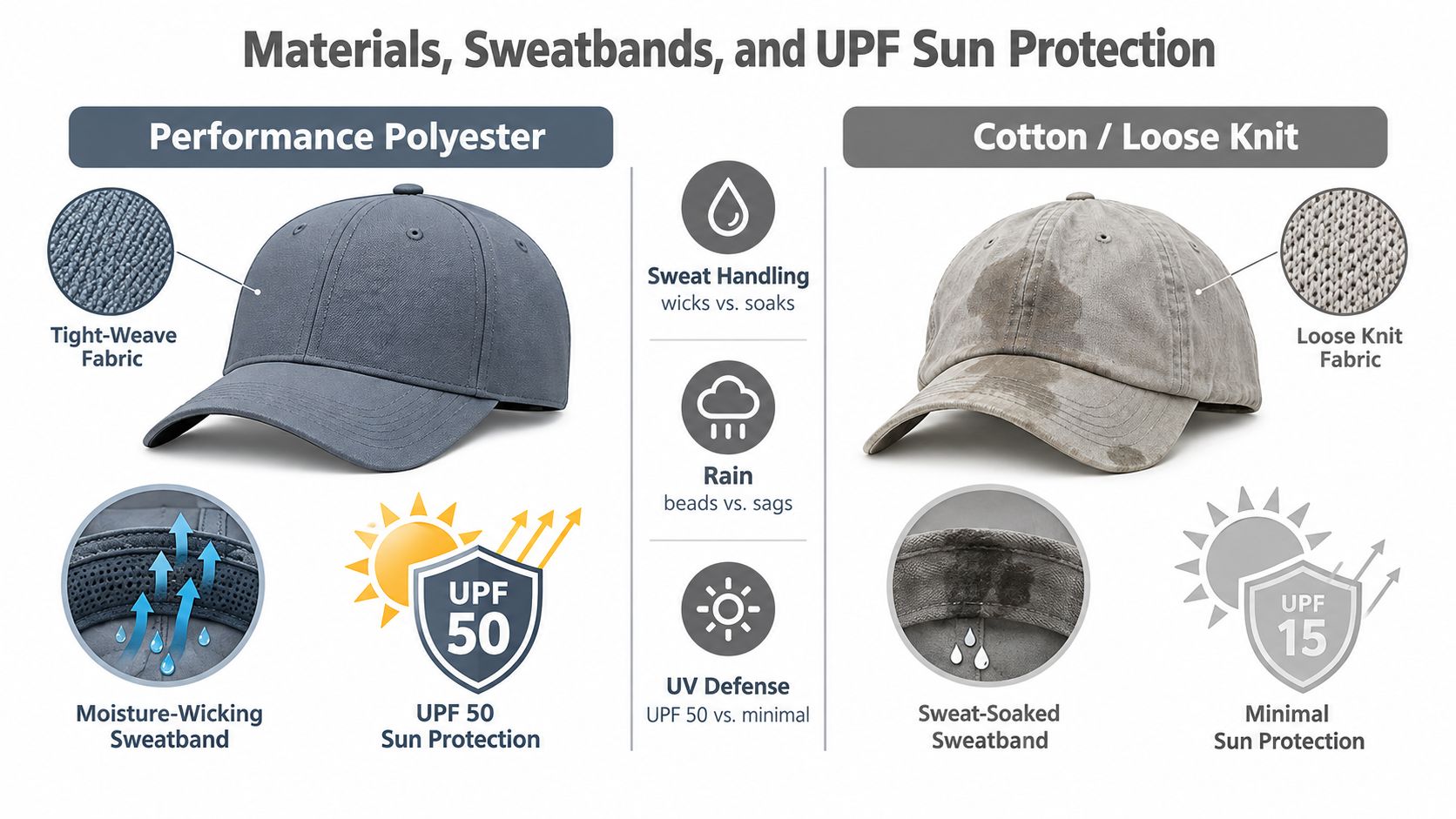
Material decides whether your hat feels like equipment or becomes a damp souvenir halfway through the day. For active wear, polyester and nylon are the practical starting points. They're lightweight, breathable, and better at moving sweat away from your skin so moisture can evaporate rather than sit inside the crown, as explained in this guide to moisture-wicking golf hat construction.
Cotton still has a job. Cotton twill feels natural, pairs beautifully with casual clothing, and performs well on cooler or lower-sweat days. It becomes less appealing in humidity because it holds moisture and takes longer to dry. A small amount of stretch fiber can make a performance cap more comfortable by easing pressure around the head during long wear.
Read the sweatband before admiring the logo
Turn the hat inside out. The interior band tells you more about real-world comfort than the front embroidery.
- Wicking band: Polyester, terry, or perforated synthetic material pulls moisture away from your forehead.
- Soft contact: The band should feel smooth, without a rough seam pressing into your skin.
- Stable structure: A good band keeps the front panel from collapsing as it absorbs moisture.
- Easy care: Removable or clearly washable sweatbands are useful if you wear the hat often.
A moisture-wicking band catches sweat before it reaches your eyes, which matters during a full round or a long event. It also helps protect the front panel from the familiar darkening and salt marks that make a once-good hat look tired.
Use UPF as a specification, not a marketing flourish
For direct sun, choose a hat with a stated UPF rating. Commercial sports caps commonly advertise UPF 50+, described as blocking up to 98% of harmful UV rays, while using lightweight, breathable, quick-drying fabrics, according to this UPF 50+ sports cap listing.
Mesh improves airflow, but exposed mesh can provide less coverage than a tightly woven crown. If you choose a trucker-style or ventilated cap, make sure the brim and front panels cover the areas facing the sun. My recommendation is simple: performance synthetic fabric, a wicking sweatband, and UPF 50+ for long outdoor days. Cotton is for the style-first outing, not the humid 18-hole marathon.
For more detail on choosing headwear for bright courses, see this guide to golf hats for sun protection.
Coordinating Team Colors Without Going Overboard
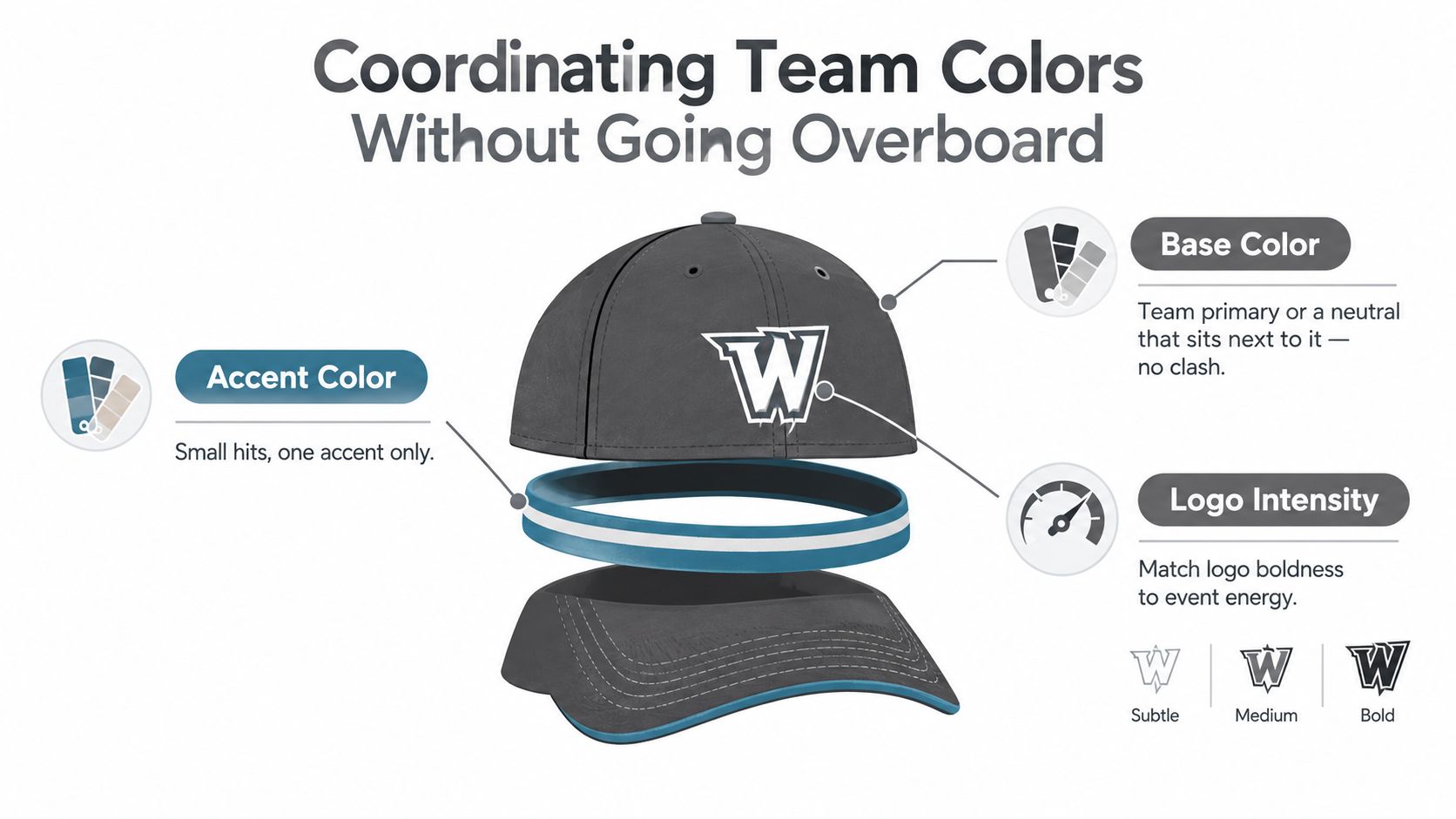
Team colors should make the outfit feel intentional, not loud enough to guide aircraft. The easiest approach uses three layers: base color, accent color, and logo intensity. Get those three decisions right and the hat will look connected to your outfit without turning you into a walking billboard.
Start with the base
Choose the team's primary shade if the event is openly spirited. For a more flexible piece, use a neutral that sits comfortably beside the team palette. Navy, cream, charcoal, black, and washed khaki usually give you more outfit options than a bright novelty color.
The hat's base should do most of the visual work. If the crown is already vivid, keep the shirt and trousers quiet. A neutral cap can support a louder jersey or jacket without creating a color clash.
Add one controlled accent
Use the accent color in a small place, such as the underside of the brim, piping, stitching, or a rear closure. That detail rewards a closer look and keeps the design from shouting across the room.
Match the brim accent to one existing detail in your outfit. Shoes, a belt, or a watch strap can carry the same note without requiring another logo. Don't try to match every item. Coordinated isn't the same as laboratory-tested.
Set the logo volume
A subtle embroidered mark suits a clubhouse lunch or business-adjacent event. A bold front logo belongs at a tailgate, bleacher section, or casual fan gathering. The setting decides how much visual noise the hat can carry.
Use these rules:
- One loud team piece: Let the hat or shirt lead, not both.
- One accent color: Small hits look considered; multiple bright accents look accidental.
- Muted surroundings: Pair a statement hat with simple clothing.
- Dark for versatility: Darker team tones move easily from daytime sport to evening plans.
- Bright for energy: Brighter shades work best when the event itself is casual and expressive.
A clean game day hat should show allegiance with confidence. It shouldn't need a paragraph of explanation.
How to Get the Fit Right for Long Days Outside
A hat that drifts during a putt is annoying. A hat that pinches your temples for hours is worse. Fit starts with measurement, not optimism.
Measure around your head two finger-widths above your eyebrows, keeping the tape level as it passes over the fullest part of your head. Then compare that measurement with the brand's chart. A fitted size and a stretch cap can use similar labels while feeling completely different, so never assume one brand's number translates perfectly to another.
Aim for secure contact without pressure. You should be able to slide one finger between the band and your forehead, but the hat shouldn't lift when you look down or turn into the wind. Try it with your sunglasses on, because the arms can create pressure behind the ears. Hair volume matters too. A cap that fits a close crop may feel tight over a ponytail, braids, or thicker hair.
Choose the closure based on how much control you want
A fitted cap gives the cleanest profile but requires accurate sizing. It's ideal if you know your measurement and dislike visible adjustment hardware.
A snapback or strapback gives flexibility for changing hair, temperature, and comfort. Start with a snug setting, then loosen slightly if the band creates pressure. Sweat and heat can change how the hat feels during the day, so the most comfortable adjustment at home may not be the best one after several hours outside.
A stretch-fit cap offers a compromise. The fabric conforms quickly and can feel smooth during active wear, but it still needs to sit securely rather than rely on excessive tension.
| Hat Type | Sizing Method | Ideal Fit Feel | Adjustment Tip |
|---|---|---|---|
| Fitted | Head measurement and brand chart | Even, secure pressure | Measure carefully before ordering |
| Snapback | Rear snaps | Snug without a forehead mark | Adjust after wearing sunglasses |
| Strapback | Fabric or leather strap | Controlled and flexible | Keep the strap flat and centered |
| Stretch fit | Elastic blend | Close, comfortable contact | Avoid sizing down for extra security |
For a useful measuring walkthrough, follow this guide on how to measure your head. If you're ordering branded or group headwear, T-Shirt Envy custom headwear is another place to review customization options and think through consistent sizing across a team.
Fit check: Bend forward, look side to side, put on your sunglasses, and wear the hat for several minutes. If you're already thinking about the band, the fit isn't right.
Your game day hat should survive wind, movement, sunscreen, and a long walk without leaving a headache behind.
Quick Care Routine That Keeps Your Hat Game-Ready
Sweat, sunscreen, dust, and spilled drinks all leave evidence. You don't need a complicated cleaning system, but you do need to stop treating the hat like it's indestructible.
Start with a soft-bristle brush after each outing. Work in one direction to lift loose dirt without roughing up the fabric. A clean makeup brush can work for delicate embroidery, while a slightly firmer garment brush suits sturdy twill and synthetic panels.
Clean the part that gets dirty first
The sweatband usually needs attention before the crown. Mix mild detergent with cool water, dampen a microfiber cloth, and dab the band rather than soaking the hat. Work in short passes, then wipe away soap residue with a clean damp cloth.
For a deeper wash, use cool water and a gentle hat cleanser. Avoid aggressive scrubbing around embroidery and avoid twisting the brim. Shape the crown and brim while damp, then air dry the hat on a rounded object or a proper hat form.
- Brush: Remove dry dirt before adding water.
- Spot clean: Target the sweatband and visible marks.
- Hand wash: Use cool water for a fuller clean.
- Reshape: Restore the crown and brim before drying.
- Air dry: Keep the hat away from the dryer and direct heat.
A dryer can distort the crown, shrink natural fibers, and turn a once-clean brim into a permanent curve you didn't choose. Direct sunlight can also fade darker team colors while the hat dries, so use a shaded, ventilated spot.
Rotate and store with intention
Two or three hats in rotation give each one time to dry and recover its shape between wears. Store them on hooks, shelves, or in hat boxes away from direct sunlight. Don't stack heavy objects on top of structured crowns, and don't leave a damp hat in the car.
The payoff is visible. Fresh sweatbands, crisp brims, and stable color make a hat look considered long after the novelty of the logo wears off. A short cleanup after each event beats trying to rescue a stained, misshapen cap at the start of the next one.
Picking Your Next Game Day Hat in Five Minutes
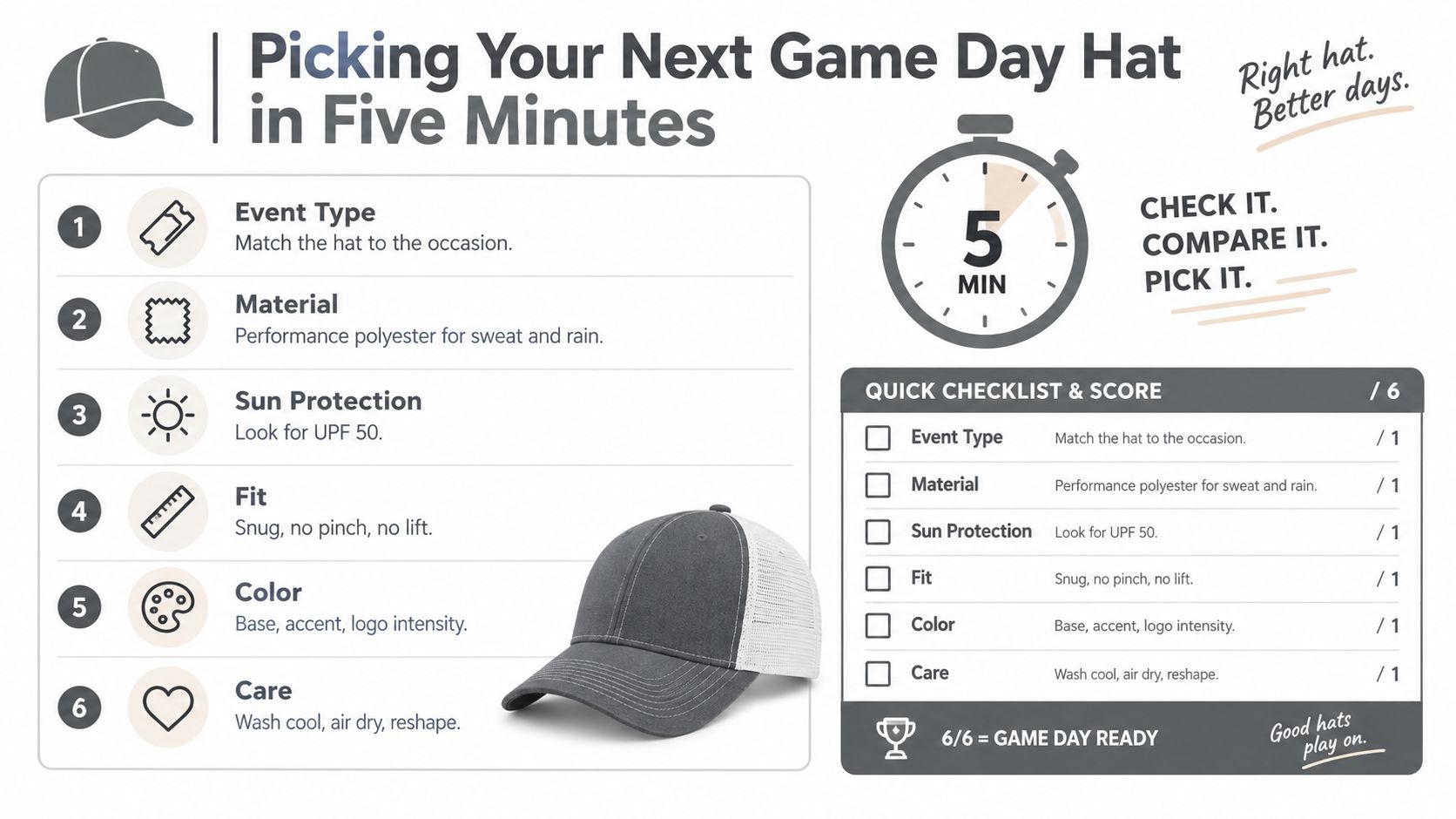
Shopping gets easier when you stop browsing by mood. Use a short rubric that forces the hat to earn its place in your kit.
Minute one starts with the event
Name the primary setting, not every possible setting. A tournament round, 19th-hole gathering, tailgate, and casual nine each reward a different balance of coverage, polish, and personality.
- Tournament round: Choose a structured baseball cap with performance fabric and serious sun coverage.
- 19th hole: A cotton twill cap or controlled flat brim can look more relaxed and social.
- Tailgate: Use the team logo and color more freely, especially if the surrounding outfit stays simple.
- Casual round: Pick the silhouette you'll wear repeatedly, not the one that only photographs well.
If you expect the hat to move between settings, choose the least theatrical silhouette that still solves the weather problem. That usually means a curved-brim cap with a clean front.
Minute two checks the material
Sweat and rain push the decision toward polyester or nylon. Dry, mild weather leaves room for cotton twill. If the hat will sit on your head through a long round, inspect the sweatband before you inspect the stitching.
Minute three verifies the sun solution
Look for a stated UPF rating when direct exposure is part of the plan. A wider brim or wraparound silhouette can increase shade around the ears and neck, while an open visor improves airflow but leaves the crown exposed. Do not choose a visor for all-day sun just because it feels cooler at the fitting mirror.
Minute four decides fit
Choose fitted if you know your measurement and want a tidy profile. Choose snapback or strapback if you expect hair, sunglasses, or comfort preferences to change. Choose stretch fit if you want a close, adaptable feel without visible adjustment hardware.
Bend forward. Turn your head. Put on your sunglasses. If the hat lifts, pinches, or presses against the arms, reject it. You're shopping for a long day, not a five-second selfie.
Minute five edits the color
Apply the three-layer test:
- Base: Team primary or a neutral companion.
- Accent: One small hit on the brim, stitch, or closure.
- Logo: Subtle for polished settings, bold for high-energy events.
If the hat is loud, make the rest of the outfit quiet. If the shirt already carries a large logo, choose a restrained cap. The goal is a recognizable kit, not competing broadcasts.
Three combinations that rarely miss
For tournament rounds: Choose a structured performance polyester cap with a stated UPF rating, a moisture-wicking sweatband, and a restrained logo. Pair it with a neutral polo and clean golf trousers.
For the 19th hole: Pick a structured cotton-twill dad cap or a low-key strapback in a team primary or adjacent neutral. Add one matching accent through the brim or shoes, then stop.
For casual outings: A clean neutral trucker or curved-brim cap works when airflow matters and the event is relaxed. Keep the front graphic modest unless the setting is explicitly fan-driven.
2ndShotMVP offers golf hats, beanies, and lifestyle apparel for men and women, including collections such as Fun Golf Hats and flex-fit golf hats. That makes it a relevant place to browse when you want a game day hat with a golf-specific point of view rather than generic sports merchandise.
Your final checklist is short: event, material, sun, fit, color, care. If a hat passes all six, add it to the cart. If it fails the weather or fit test, leave it behind, no matter how good the logo looks.
Shop 2ndShotMVP for golf hats, beanies, and lifestyle apparel that bring a bit of personality to the course and the 19th hole. Pick a silhouette that matches your next outing, then wear it confidently from the first tee through the final round of drinks.

