

Essential Golf Accessories For Men
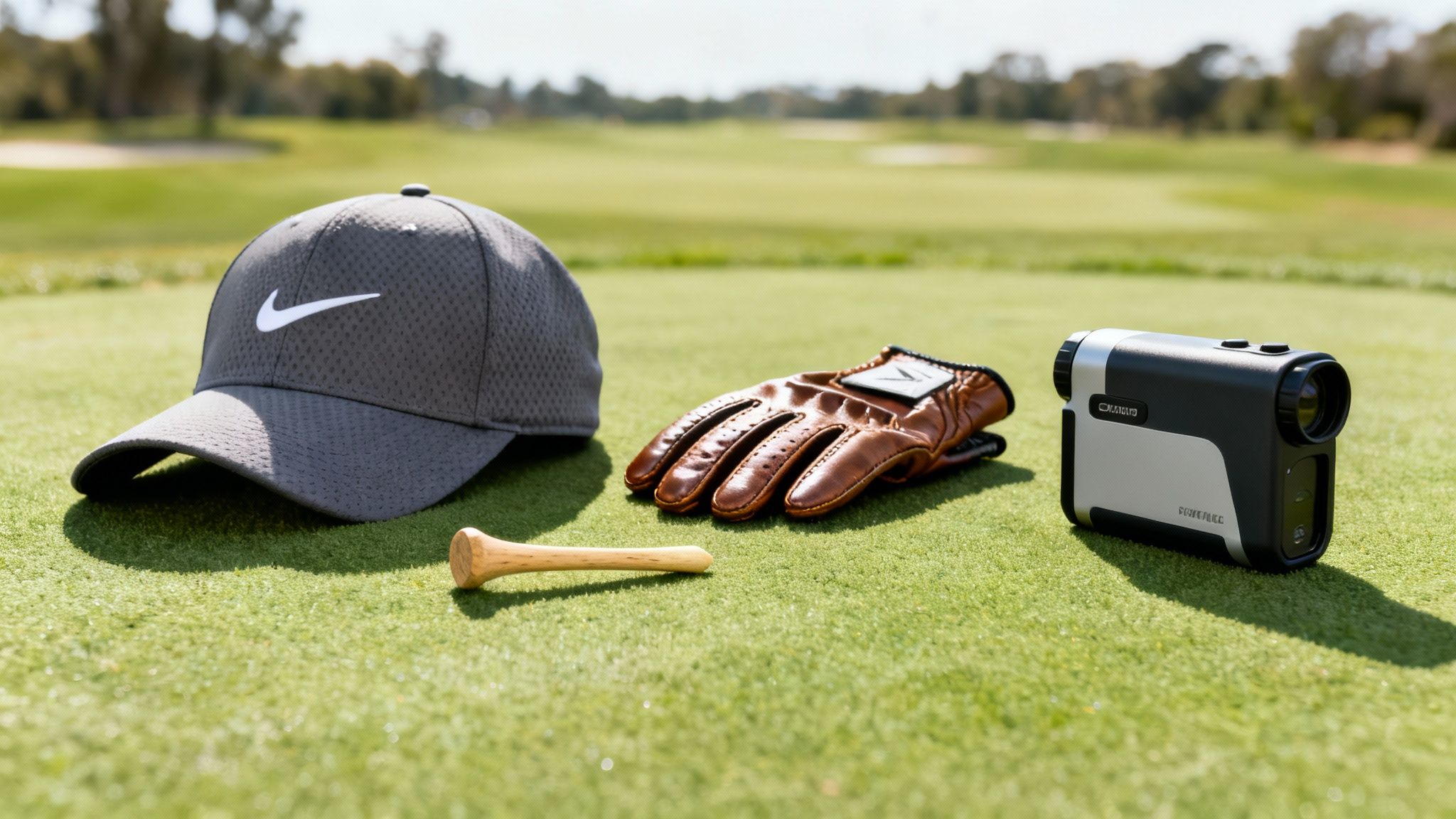
If you’re serious about shaving strokes, start with four game-changers: hats, gloves, tees and smart tech. Each one tackles a different on-course challenge, and together they can lift your entire game.
- Hats fend off glare and keep excess sweat at bay.
- Gloves deliver steady contact, even when conditions get messy.
- Tees might look basic, but they can tweak your launch angle for extra yardage.
- Tech tools—like rangefinders—turn guessing into pinpoint accuracy.
“A smart piece of gear often trims strokes simply by boosting your confidence at address.”
Summary Of Top Golf Accessories
Before you shop, here’s a quick snapshot of our favorite picks in each category.
| Category | Top Pick | Key Benefit |
|---|---|---|
| Hat | Titleist Tour Sports Cap | Moisture-wicking sun protection |
| Glove | FootJoy WeatherSof | Secure grip in all conditions |
| Tee | Pride Professional Tees | Improved launch consistency |
| Rangefinder | Bushnell Pro X3 | Pinpoint yardage accuracy |
Keep this table handy next time you tee off for a no-fuss buying guide.
Why Choose These Categories
Every piece of gear solves a specific fairway puzzle.
- Hats act like your personal sunshade, cutting glare so you can lock onto targets.
- Gloves lock down your hold on the club, even through dew and rain.
- Tees fine-tune launch angle, helping you squeeze out extra distance.
- Tech gear hands you reliable numbers on yardage and club choice.
Upgrade one item at a time and watch your consistency climb.
Next Steps
Ready to feel the difference on your next practice session?
- Test one accessory at a time to gauge its real impact on your swing.
- Visit 2ndShotMVP for curated styles and honest reviews.
- Reference this summary table when shopping to zero in on what matters.
- Match your gear to the weather—rain, heat or chill—to maximize performance.
- Prioritize fit and comfort; a well-fitting glove or hat means fewer distractions.
Step onto the course with confidence and let your new gear do the talking.
Understanding Why Quality Accessories Improve Your Game
Think of your favorite golf accessory as a secret coach in your bag. A top-notch glove isn’t just fabric—it molds to your hand like a second skin, locking in grip when the pressure’s on.
Meanwhile, a quality visor acts like the hood on a camera lens, cutting glare so you can read every subtle break on the green.
“Nailing the perfect glove, hat, or tee can be the secret handshake to confidence and consistency on every hole.”
Premium materials and smart design blend to give you sharper feedback on each swing—helping you dial in your mechanics from the first drive to the 18th putt.
How Accessories Boost Swing Consistency
When dew or heat spikes mid-round, your grip shouldn’t waver. A glove built with precision stitching and moisture-wicking panels holds tension from tee-off to the back nine.
That steady hand placement translates into repeatable swing mechanics, so you’re not guessing at impact every time.
- Stable Grip: Maintains control in humid or wet conditions.
- Clear Sightlines: Visors and hats block sun glare for crisp target alignment.
- Accurate Tees: Consistent tee height optimizes launch angle and spin.
- Tech Feedback: Rangefinders and launch monitors serve up real-time yardages and trajectory data.
Together, these tools reinforce muscle memory and cut out the guesswork on course.
Market Trends And User Insights
The global golf accessories market topped USD 7.37 billion in 2021 and is on track to hit USD 8.895 billion by 2025, with North America and Europe leading the charge. For a deeper dive, check out the latest analysis from Cognitive Market Research.
| Region | Market Share | Projected CAGR |
|---|---|---|
| North America | Largest | 5.2% |
| Europe | Fastest | 6.1% |
Survey data shows 73% of golfers swap out gloves each season chasing those tiny performance gains. And in real-world tests, players using premium gear report saving up to 1.5 strokes per round on average.
“Pros recommend upgrading one accessory at a time so you can really feel the difference,” says a veteran pro-shop manager.
Ready to keep your clubs—and your performance—spotless? See our step-by-step cleaning tips in the article How To Clean Golf Clubs Properly.
Embrace quality headwear, gloves, tees, and tech—and watch your best rounds unfold this season.
Core Concepts Behind Golf Accessories
Behind every glove, hat and high-tech gadget is a subtle science that can tweak your swing for the better. When you break gear down into four pillars—materials, fit, durability and tech—it’s easier to see how each piece can either help or hinder play.
- Materials: Dictate feel and control, especially in gloves
- Fit: Keeps you comfortable when the pressure heats up
- Durability: Ensures gear lasts season after season
- Tech: Delivers real-time insights on every shot
This framework lets you pick the best golf accessories for men that suit both your swing and your style on the course.
Materials And Grip Feel
Glove material influences how connected you feel to the club. Think of leather as a confident handshake—steady and secure. In contrast, synthetic blends stretch with your hand and encourage airflow on hot days.
“A glove that locks in tension without pinching builds trust in your swing.”
Fit And Comfort
A hat that’s too tight will wear you down by the 10th hole. On the flip side, loose gear can flap and distract. That’s why moisture-wicking fabrics act like mini air conditioners, moving sweat away from your skin and letting you focus on the shot ahead.
- Moisture-Wicking Properties: Prevent sweat fatigue
- Adjustable Hat Bands: Fit any head shape
- Strategic Collar Designs: Balance coverage with airflow
Durability And Performance
Longevity often comes down to construction and the density of materials. High-density tees, for example, are like mini launch pads—they shrug off splinters and keep your ball at a consistent height.
| Tee Height | Launch Angle | Spin Change |
|---|---|---|
| 1.25 in | Low to Mid | +2% |
| 1.5 in | Mid | +5% |
| 1.75 in | Higher | +8% |
A steady tee height means predictable spin and trajectory. That equals repeatable drives.
Tech Features And Feedback
Think of modern devices—rangefinders, GPS watches and launch monitors—as your own personal caddie. They whisper yardages and swing metrics right into your ear.
- Laser rangefinders for pinpoint accuracy within yards
- GPS watches loaded with data on 40,000+ courses
- Launch monitors tracking ball speed, spin rate and more
Real-time statistics turn guesswork into precision.
Bringing It All Together
When you marry the right material, a precise fit, robust construction and smart tech, your gear becomes an orchestra playing in sync. Each piece feeds into the next, boosting your confidence and performance.
With these core ideas under your belt, you’re ready to dive into the next section: choosing the perfect mix of golf accessories for your game.
How To Choose The Right Golf Accessories For Men
Finding the perfect golf accessories isn’t about chasing logos—it’s about dialing in the details that support your swing. A hat that breathes, a glove that grips, and a rangefinder that reads distances with pinpoint accuracy can shave strokes off your score.
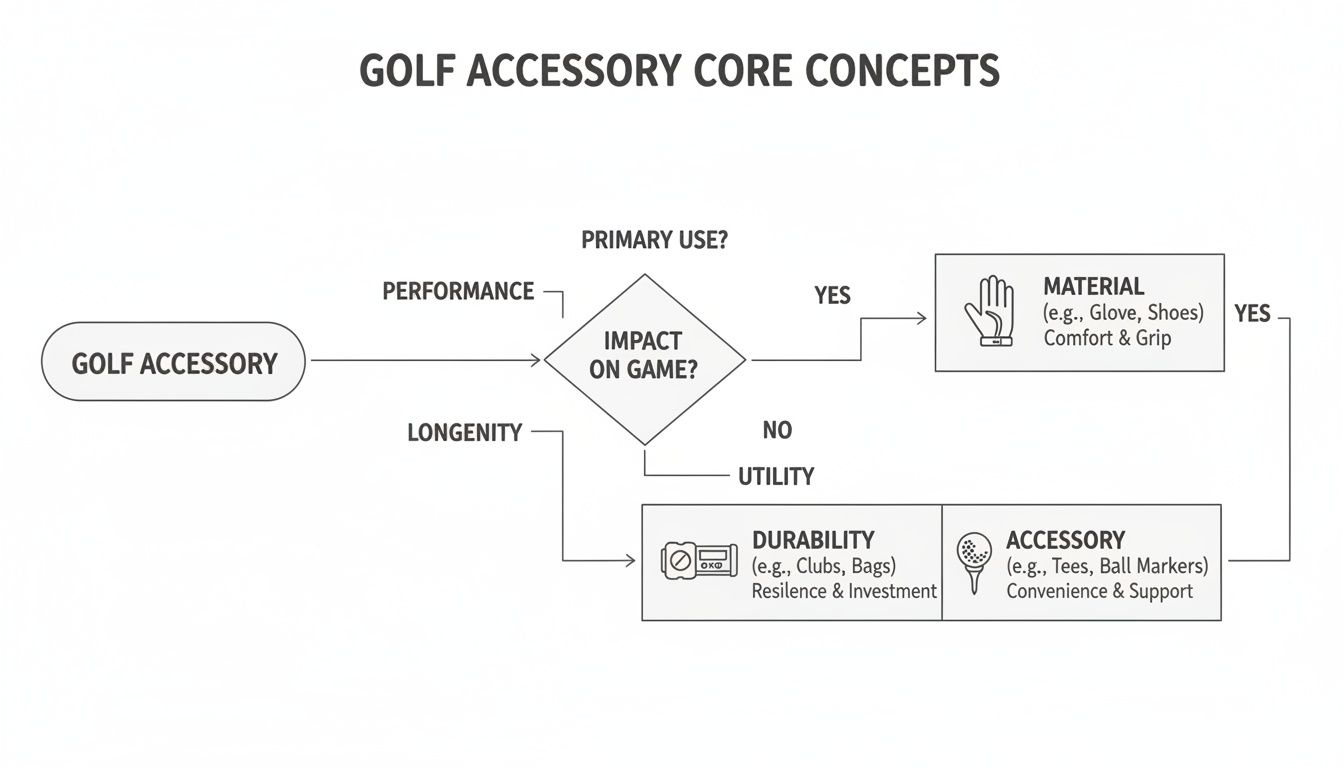
Start by zeroing in on three core factors:
- High heat or humidity? Opt for moisture-wicking hats and waterproof gloves to keep your focus locked in.
- Yardage needs? Laser rangefinders offer pinpoint readings, while budget-friendly GPS units give you the lay of the land.
- Material matters. Leather gloves cradle your hand; synthetic blends let air flow.
Key Questions To Drive Your Gear Choice
Every question you ask should filter out one more mismatch and bring you closer to gear that feels tailor-made. For instance, a sunshade hat with UPF 50+ protection can be the difference between crisp focus and squinting under a blazing sky.
On the other hand, trialing gloves in a quick practice session reveals truths no spec sheet ever will. And don’t just trust marketing copy—dig into real-world user feedback to spot hidden quirks.
Here’s a simple comparison to keep you on track:
| Factor | Why It Matters | Example |
|---|---|---|
| Material | Comfort, airflow, and grip | Leather vs. synthetic gloves |
| Durability | Longevity and low upkeep | Rugged knits vs. delicate leathers |
| Technology | Accuracy and data to inform your shot choices | Laser rangefinders vs. GPS units |
Testing And Budget Strategies
Nothing beats a side-by-side gear test on the driving range. Rotate hats, swap gloves, and see which setup helps you strike the ball more consistently.
If you’re hunting for that glove that feels like a second skin, check out our glove size guide. Then, use these tactics:
- Rotate each piece of gear during practice to isolate its real impact
- Compare price tiers to balance features with cost
- Read at least 20 reviews to catch any durability or fit issues
Putting It All Together
Bring your answers, test results, and budget thoughts into one clear roadmap. When you focus on core categories—material quality, durability scores, and technology specs—the noise fades and the best options rise to the top.
I once watched amateur golfer Ryan switch from a synthetic glove to a leather model after a weekend of trials—and he cut three strokes off his nine-hole score the very next day.
To summarize:
- Ask targeted questions before you shop
- Test gear under real conditions
- Weigh features against price, not branding
- Lean on user satisfaction ratings above 4.5 stars
- Make incremental upgrades for steady gains
Take these steps, and you’ll step onto the range with confidence—ready to see how smart gear choices can transform your game.
Comparing Different Golf Accessory Categories
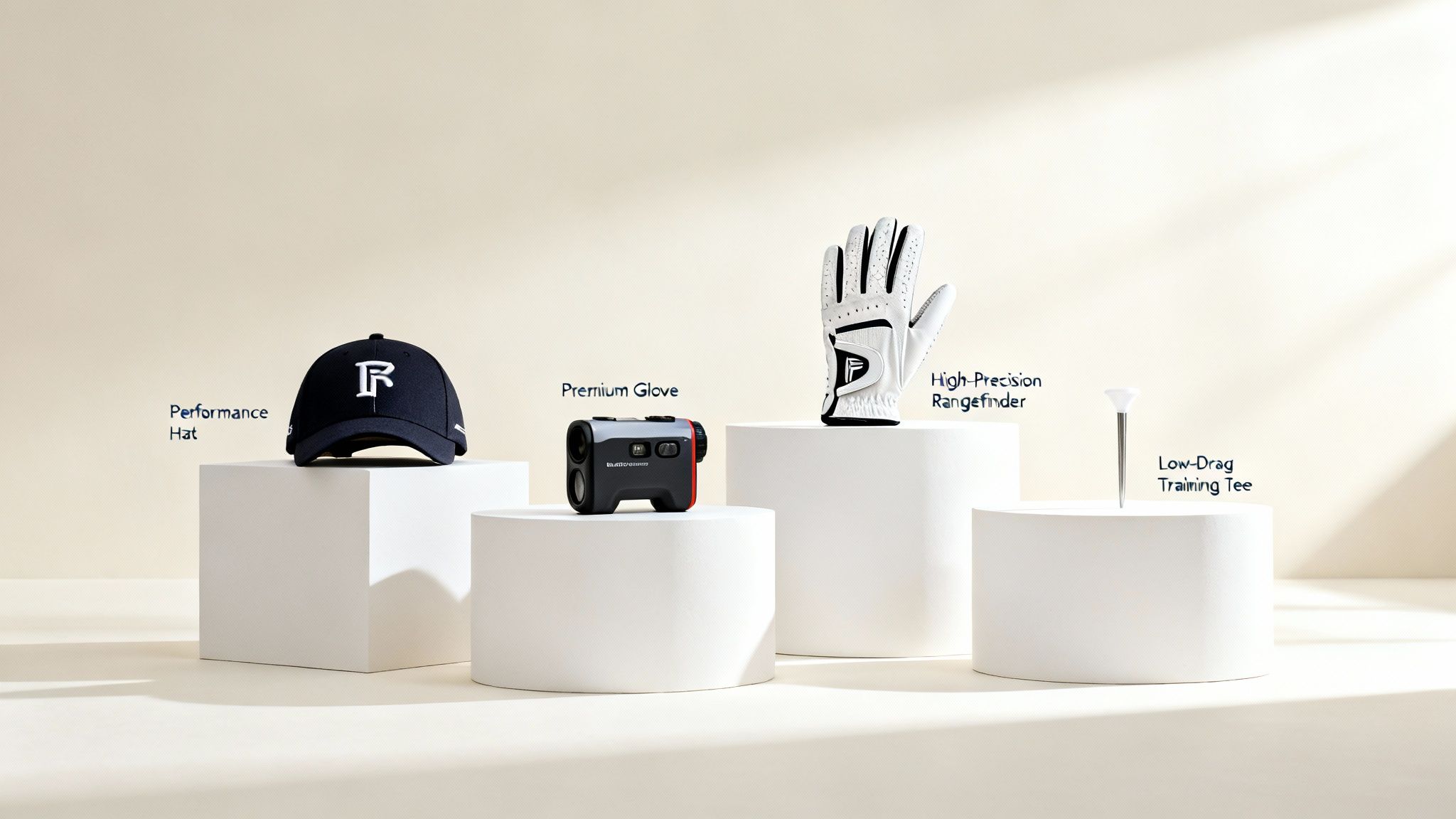
Picture your golf bag spread open on the tee box. Hats, gloves, tees, rangefinders, training aids—all lined up and ready for action. Each one solves a different problem: from beating the sun to dialing in your shot precision.
Think of your glove as a trusty sidekick, channeling sweat and locking in your grip when the pressure mounts. Your hat, on the other hand, is like a portable sunshade, keeping glare out of your eyes so you can zero in on the pin.
Tees quietly adjust launch angle and spin, acting as little launch engineers without you lifting more than a finger. And training aids? They’re your personal swing coach, offering on-the-spot feedback as you groove your motion.
Below is a side-by-side look at what each accessory brings to the bag.
Comparison Of Accessory Categories
| Category | Price Range | Key Feature | Best Use |
|---|---|---|---|
| Hats | $20-50 | Moisture-wicking breathable mesh | Sun protection and cooling |
| Gloves | $15-40 | Textured palm panels | Secure grip in humid or wet play |
| Tees | $1-5 (pack) | Low-friction tee tips | Boosting initial ball speed |
| Rangefinders | $120-600 | Laser-precise yardage | Accurate club selection |
| Training Aids | $30-300 | Instant swing-feedback mechanisms | Path and tempo refinement |
This snapshot zeroes in on each category’s sweet spot. Use it to decide whether comfort, accuracy, or consistency should come first in your shop cart.
Market Growth Impacts
Golf accessories aren’t just filling carts—they’re reshaping the market. In fact, the golf equipment sector is expected to cross USD 16 billion by 2025 as more players click “add to cart” and brands roll out fresh gadgetry.
Discover more insights about golf industry growth in the full report.
That chart captures projected revenue trends and highlights how e-commerce now drives accessory sales.
Key Insight: The accessory segment is outpacing core club sales, proving that small upgrades can deliver big on-course gains.
Hats
- Price Range: $20-50
- Key Strength: Lightweight, breathable fabric
- Best Use: Blocking glare while keeping your head cool
A well-designed hat is your personal shade provider—wicking sweat away while you square up for the perfect swing.
Gloves
- Price Range: $15-40
- Key Strength: Textured palm panels for slip control
- Best Use: Maintaining a rock-solid grip in damp or muggy conditions
Swap out that worn glove before your next round—you’ll feel the difference the moment you take address.
Tees
- Price Range: $1-5 (pack)
- Key Strength: Reduced friction for cleaner ball launch
- Best Use: Maximizing carry distance with less effort
Experiment with a fresh tee on the range. You might just pick up an extra yard or two off the tee box.
Rangefinders
- Price Range: $120-600
- Key Strength: Laser-accurate distance readings
- Best Use: Pinpointing exact yardages to avoid guessing
Think of a rangefinder as that coach whispering precise yardages in your ear—no more wild guesses about distance.
Training Aids
- Price Range: $30-300
- Key Strength: Real-time swing feedback
- Best Use: Drilling consistency in swing plane and tempo
From weighted clubs to alignment sticks, these tools are all about building muscle memory—and repeating the right motion until it sticks.
How To Narrow Your Choice
Start by matching gear to your usual playing conditions: if you face brutal sun, focus on hats and gloves with top-notch moisture control.
Test one accessory at a time on the range—tee up with a low-friction design and track how your carry distance changes.
Weigh features against your budget. A premium rangefinder may feel pricey, but shaving strokes off your score often pays dividends.
Learn more about golf bag essentials in our Golf Bag Essentials Guide to support your selections.
Final Recommendations
Zero in on the accessory that tackles your biggest on-course challenge—sun glare, slippery grips, or inconsistent launch.
Give each new piece a fair trial over a few rounds, and take notes on how your numbers shift.
Aim for gear with user ratings above 4.5 stars for proven durability.
Rotate your setup by season to match weather swings and stay adaptive in your approach.
A well-chosen combo of sun-blocking hats, secure gloves, friction-reducing tees, and precision tech can be the extra edge you need on the course.
Real Life Examples And Use Cases
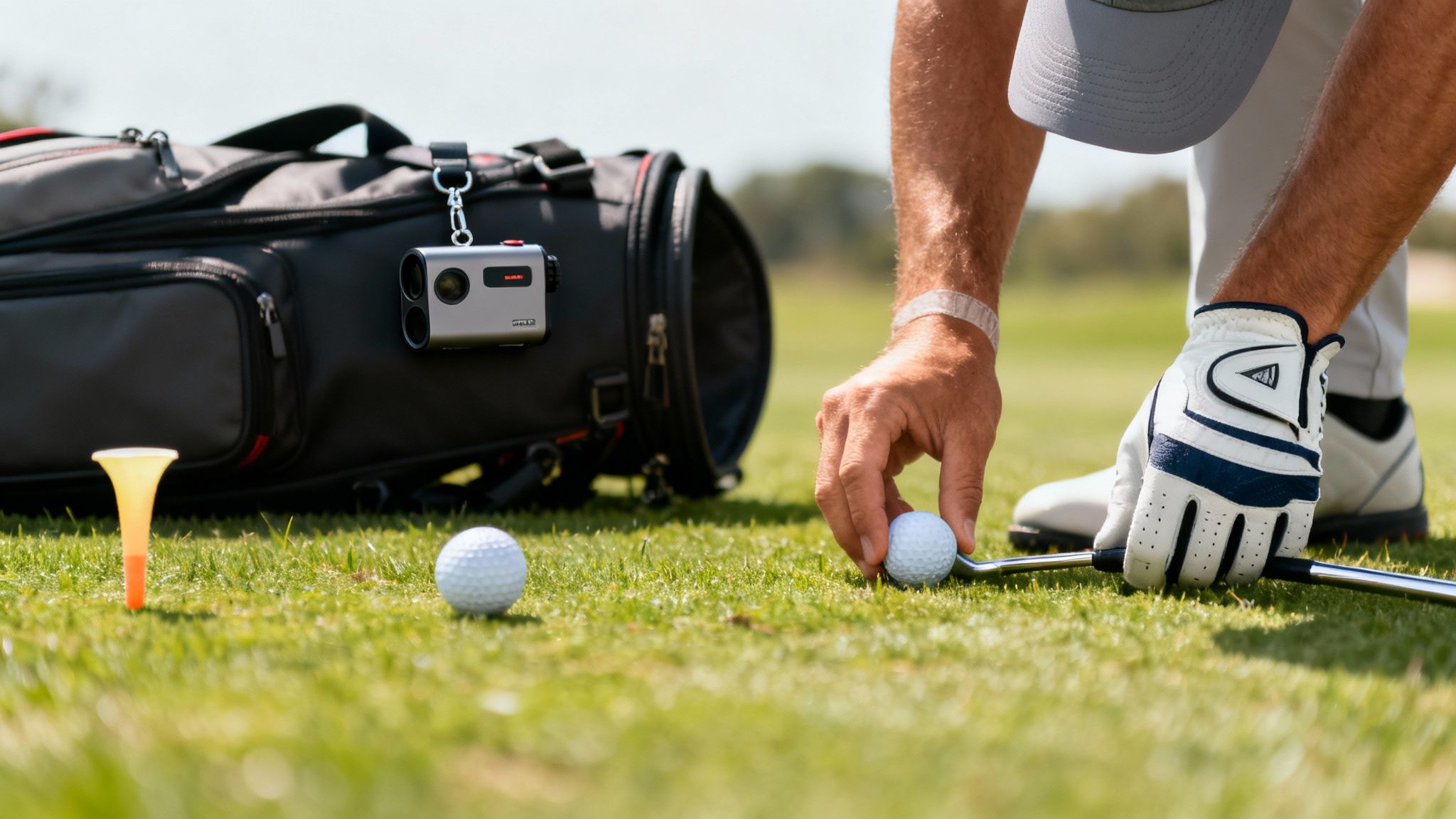
Every bit of gear in this guide truly shines once you hit the fairway. From weekend hackers to tour hopefuls, men teeing off everywhere lean on the best golf accessories for men to dial in consistency and comfort.
Touring Pro Driver Drill
Our local league’s club champion swears by a digital launch monitor to fine-tune his driver swing. By tracking ball speed, launch angle and spin rate, he discovered that bumping tee height by just 0.1 inches and tweaking his grip one notch shaved off dispersion.
In two weeks, his average carry leapt by 12 yards.
- Bring your monitor out on practice days.
- Adjust tee height in 0.1 inch increments.
- Note every grip change to replicate your best drives.
The data also exposed slight face-angle shifts that straightened out his longest shots.
Weekend Golfer Comfort Upgrade
One casual player was quitting early each afternoon, plagued by heat and headaches. A switch to a ventilated performance hat dropped skin temperature by 3°F, easing fatigue through the back nine.
He shaved two strokes off his usual score thanks to clearer focus.
“I didn’t realize a hat could change everything until I wasn’t squinting,” he laughs.
That moisture-wicking sweatband kept sweat out of his eyes on booming sunny days.
Teaching Pro Ball Striking
On the teaching side, a coach uses colored tees to teach ball height: low, mid and high. Students knock out 20 balls at each setting and map their landing patterns.
They saw directional control improve by 15% at the mid-tee height.
- Pick three distinct tee heights.
- Hit 20 balls with each setup.
- Record landing zones and tweak your stance.
He pairs this drill with instant video replay for on-the-spot swing fixes.
These case studies show how both amateurs and tour-level players weave targeted accessories into their routines. Follow their blueprint to shave strokes and boost confidence on every hole.
Explore 2ndShotMVP for these tools to boost performance.
Frequently Asked Questions About Golf Accessories
What glove material works best in humid climates and why choose leather over synthetic?
Leather gloves feel like a second skin when it’s muggy. They don’t stretch out the way most synthetics do. This means you'll enjoy a solid grip and consistent contact from tee to green.
How do you pick between a laser rangefinder and a GPS unit based on accuracy and budget?
If you crave spot-on distances, a laser rangefinder will dial you in to within a yard—though it typically starts at around $200. On the other hand, a GPS unit gives you access to thousands of courses for roughly $100, sacrificing a bit of precision for savings. For the road warrior golfer, that’s often money well spent.
Which hat features offer the most sun and rain protection on the course?
Look for these three essentials:
- Wide Brim to shield your eyes and neck
- UPF 50+ Fabric for serious sun defense
- Moisture-Wicking Sweatband to keep you dry
A water-resistant finish is a nice bonus—it sheds a drizzle without weighing you down. And a snug-fit performance visor will keep glare and raindrops at bay.
Common Questions And Insights
Are premium tees worth the extra cost for average golfers?
Absolutely. High-density tees reduce friction at impact, which translates to a cleaner ball launch. At $5–10 per pack, they endure two to three times longer than standard wooden tees—fewer snap-offs means steadier drives.
| Question | Key Tip |
|---|---|
| Glove Material | Choose leather in humidity |
| Rangefinder vs GPS | Laser for precision, GPS for travel |
| Hat Protection | Wide brim plus UPF 50+ |
| Premium Tees | Use high-density for stable drives |
Key Takeaway Small tweaks in your gear can unlock bigger improvements on the course.
Tips For Testing Accessories
- Try on gloves during warm-up swings to zero in on fit.
- Keep a simple log of your scores before and after each gear change.
- Store and rotate items by season—rainy-day hats in spring, breathable fabrics in summer.
Clear, hands-on trials will guide you to the accessories that truly elevate your game.
Shop premium gear now today at 2ndShotMVP

