

Here's the deal: a great men's golf windbreaker isn't just another layer. It's your secret weapon against the elements, a lightweight shield that cuts through the wind so you can focus on your swing, not the shivers.
Why a Golf Windbreaker Gives You a Serious Edge
Think of it less as a jacket and more as a piece of high-performance equipment. When the wind picks up and the temperature drops, the last thing you need is a bulky, flapping coat messing with your backswing. This is where a proper windbreaker steps in to save your round.
It's all about eliminating distractions. A good one will stop the wind from chilling you to the bone, keeping your muscles loose and ready to fire. Plus, they’re designed to be so lightweight and packable you can stash one in your bag and forget it’s even there—until you need it most.
Pro Tip: Find a windbreaker made with a "quiet" fabric. The less rustling you hear during your takeaway, the better. It's a small detail that makes a huge difference to your concentration.
Comfort is King on the Course
Let's be honest, nobody plays their best when they're uncomfortable. A quality windbreaker nails that perfect balance of keeping the chill out without making you feel like you're wearing a trash bag.
The magic is in the details. You'll find things like stretch panels built into the shoulders and back, along with adjustable cuffs that create a tailored fit that moves with you, not against you.
- Flexible Fabrics: Look for materials that stretch and recover, adapting to every twist and turn of your swing.
- DWR Coating: This is a Durable Water Repellent finish that makes light rain and morning dew bead up and roll right off.
- Hidden Venting: Smartly placed vents, often under the arms or across the back, let excess heat escape so you never feel clammy.
A well-designed windbreaker can cut the wind chill effect by up to 30%. That's a massive advantage for keeping your muscles warm and your game sharp.
The Numbers Don't Lie
It’s not just us saying these are essential. The golf jackets market is booming, valued at a whopping $450.75 million globally in 2024. It's projected to climb to $750.30 million by 2032, growing at a steady 6.2% clip.
This surge is part of the larger men's golf apparel trend, which was a $2.2 billion market in 2023. With men making up over 70% of the 45+ million golfers in the U.S., it's clear that guys are investing in gear that performs. You can dig into more of these stats over at the full golf jackets market report.
From the First Tee to the 19th Hole
Gone are the days of baggy, unflattering outerwear. Today's windbreakers are cut to look sharp, blending seamlessly from the course to the clubhouse.
Throw one on over your favorite polo and pair it with a 2ndShotMVP hat, and you've got a polished look that’s ready for anything. Classic colors like navy, black, and charcoal are always a good bet, but don't be afraid to rock a bolder color to show a little personality.
Honestly, You Can't Afford Not to Have One
Trying to play through a windy day without a proper windbreaker is just asking for trouble. Your muscles get tight, your focus wavers, and every gust feels like it's trying to personally sabotage your shot.
It’s your armor against the unpredictable. When you're properly shielded from the wind, you can swing with confidence, knowing the only thing you have to worry about is the shot in front of you.
Built for Whatever the Day Throws at You
The best windbreakers aren't just for wind. That DWR coating means they can handle a surprise drizzle or the heavy morning dew, keeping you dry without the need for a full rain suit.
They’re the ultimate layering piece. Light enough to go over a polo on a cool day, but roomy enough to fit over a mid-layer when it gets genuinely cold. Look for details like waterproof zippers and taped seams for that extra bit of protection.
Travel Tip: To save space in your golf bag, roll your windbreaker up tightly instead of folding it. This also helps prevent creases in the fabric.
Ultimately, you need a piece of gear that gives you freedom and protection in equal measure. A great windbreaker does just that, ensuring every drive and putt feels smooth, no matter how hard the wind is blowing.
Understanding the Anatomy of a Great Golf Windbreaker
So, what separates a truly game-changing golf windbreaker from that noisy, stiff jacket collecting dust in your trunk? It's all in the details. The best ones are engineered with smart materials and thoughtful features that work with your swing, not against it.
Think of a top-tier windbreaker as your personal on-course fortress. It’s built to shut down nasty weather while still letting your body breathe and move exactly how you need it to. Once you peel back the layers and understand what makes these jackets tick, you can spot a winner from a mile away and know precisely how it'll perform when the wind kicks up.
The Fabric Foundation Your Performance Is Built On
The heart and soul of any great windbreaker is its fabric. This choice single-handedly dictates its weight, stretch, and, crucially, how much noise it makes during your backswing. Not all materials are created equal, and the best ones walk a fine line between iron-clad protection and feather-light playability.
Here’s a quick rundown of the usual suspects you’ll see on the rack:
- Polyester: This is the undisputed workhorse of the windbreaker world. It’s tough, lightweight, and doesn't wrinkle easily. Modern polyester is woven into incredibly dense patterns that create a surprisingly effective barrier against the wind.
- Nylon: A step up in strength and durability from polyester, nylon feels a bit smoother and offers phenomenal wind resistance. You'll often find it in more premium jackets because of its resilience and sleek look.
- Synthetic Blends: Now, this is where the real magic happens. Brands will blend polyester or nylon with spandex or elastane, and that little infusion is what gives you that critical four-way stretch. This lets the jacket move with your body as you rotate, so you never feel that restrictive pull mid-swing.
A great windbreaker should feel like a second skin, not a suit of armor. The whole point is to forget you're even wearing it. The right fabric blend makes this possible, offering protection so seamless it just becomes part of your natural game.
This infographic really nails the core benefits you get from a well-made windbreaker, tying together performance, comfort, and style.
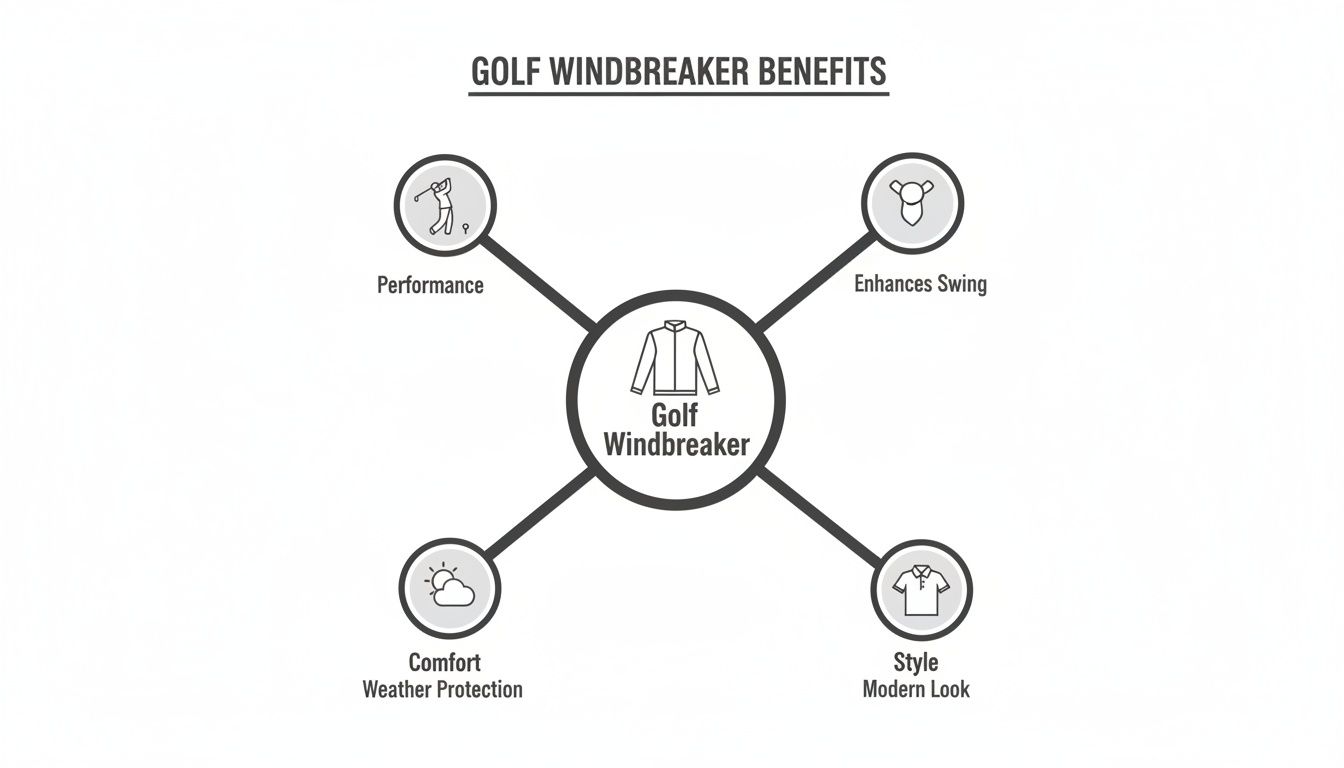
It’s easy to see how these three pillars support each other to make your time on the course that much better.
Decoding the Tech: Wind Resistance and Breathability
Beyond the basic material, it's the tech baked into the fabric that really defines how a jacket performs. You’ll constantly hear two terms thrown around: wind resistance and breathability. They’re a classic tag team—one can't work well without the other.
Wind resistance is simple enough. It’s the fabric's ability to stop wind from slicing through to your skin. This is usually done with a super-tight weave or a special coating. A jacket with a solid wind-resistance rating completely neutralizes that biting cold on a blustery day.
But a jacket that only blocks wind would turn into a personal sauna pretty quick. That's where breathability steps in. This is all about letting moisture vapor—a.k.a. your sweat—escape. Without it, you'd feel clammy and gross by the third hole. The best windbreakers use clever microporous membranes with pores tiny enough to block wind but big enough to let sweat out. It’s the ultimate one-way street for moisture.
Essential Design Features to Look For
To wrap it all up, let's talk about the small-but-mighty design features that separate the good from the great. These are the little touches that prove a jacket was designed by people who actually tee it up.
Use this quick reference guide to compare the must-have features in a quality golf windbreaker.
Essential Windbreaker Feature Checklist
| Feature | What to Look For | Why It Matters for Your Game |
|---|---|---|
| "Quiet" Fabric | Soft, non-crinkly material | Minimizes distracting "swish" sounds during your swing. |
| Stretch Panels | Spandex/elastane in key zones | Allows for a full, unrestricted range of motion. |
| Adjustable Cuffs & Hem | Velcro tabs and drawcords | Seals out drafts and keeps sleeves from riding up. |
| Sealed/Taped Seams | Waterproof tape over stitching | Prevents wind and water from sneaking through weak points. |
| Strategic Ventilation | Hidden vents under arms or back | Lets excess heat escape so you don't overheat. |
Thinking about these details will help you find a windbreaker that feels less like a jacket and more like a true piece of performance gear. By understanding these components, you're ready to pick a winner that will actually improve your game on those less-than-perfect days.
For more tips on building the perfect on-course wardrobe, check out our guide to essential golf apparel and accessories.
How to Find a Windbreaker That Moves With Your Swing

Think of your windbreaker like the driver’s seat in a finely tuned sports car. No matter how slick the engine (or fabric) is, if you can’t settle into it comfortably, your performance takes a hit. A baggy jacket will flap and flap, turning every gust into an audible distraction at the top of your backswing.
Flip to the other extreme and a tight jacket feels like wearing body armor—restrictive, stiff, and downright frustrating when you’re trying to rotate freely. What you really want is a windbreaker that hugs your form just enough to feel like a second skin, one that moves so naturally you barely notice it’s there.
Performance Fit Vs Standard Fit
When shopping, you’ll see two main categories: Performance Fit and Standard Fit. Here’s how they stack up:
- Standard Fit: Roomier through the chest and torso, this cut is perfect if you like to layer up or prefer a more relaxed silhouette.
- Performance Fit: Sometimes called athletic or slim cut, it trims excess fabric and relies on built-in stretch for a quieter, more aerodynamic profile.
Key Takeaway: Most golfers swear by a Performance Fit. It eliminates wind flap and bulk, but be sure the material has enough give to let you swing freely.
The Swing Test: Four Key Checkpoints
Before you buy, take your windbreaker for a spin—literally. Stand in front of a mirror or enlist a friend to snap some photos as you go through these four moves:
-
Shoulder Articulation
Swing your club back and through. At no point should you feel any pulling across your shoulder blades. -
Sleeve Length
Address the ball and check that the cuffs reach your wrists without bunching. Adjustable closures earn extra points. -
Torso Coverage
Bend over for a putt. The hem should stay put on your lower back without riding up or bunching around your waist. -
The “No-Noise” Rule
Listen closely: a top-quality windbreaker is whisper-quiet. If you hear a swish at every move, it’s time to try another style.
A Simple Guide To Measuring At Home
Shopping online doesn’t have to be a guessing game. Grab a soft tape and note these three measurements:
- Chest: Wrap the tape around the fullest part of your chest, under the arms.
- Waist: Measure your natural waistline just above the hips.
- Sleeve: Run the tape from the center of your neck, over your shoulder, down to your wrist.
Then match your numbers to the brand’s sizing chart. If you’re torn between sizes and plan to layer, go up one size for extra comfort.
This obsession with fit is exactly why the golf windbreaker for men remains a top seller. In 2023, 38.3% of golf apparel revenue in major markets came from topwear designed for freedom of movement. Explore more insights on the growing golf apparel market at Grand View Research.
Styling Your Windbreaker from the Fairway to the Clubhouse
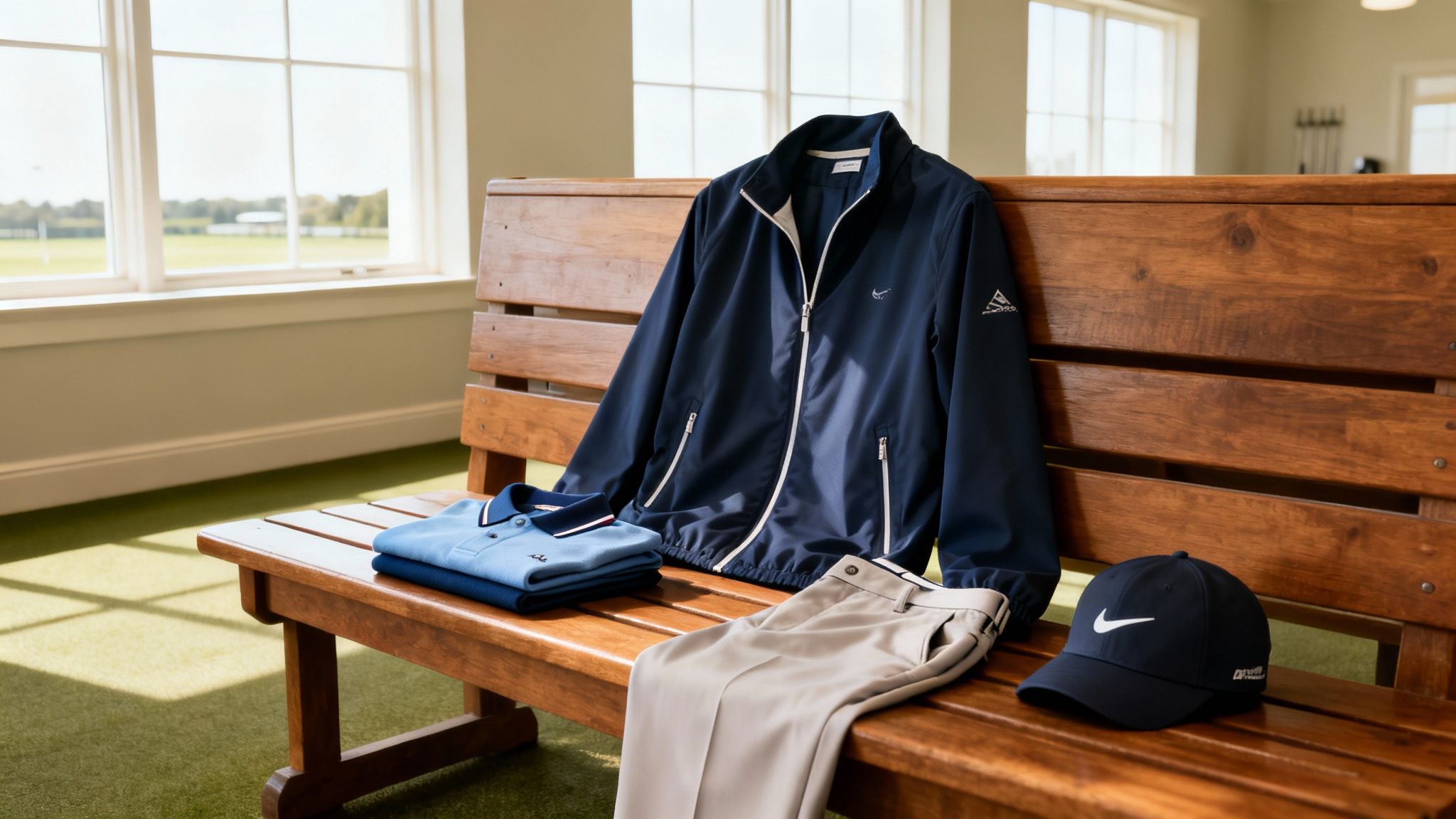
Let's be honest, the modern golf windbreaker has come a long way. It's officially graduated from "that thing you stuff in your bag just in case" to a legitimate style move. We're talking sleek, well-fitting jackets that look just as sharp at the 19th hole as they do on the first tee.
This is about more than just grabbing another layer; it's about finishing your look. The right windbreaker pulls the whole outfit together, adding a bit of polish while doing its job of keeping you comfortable.
Creating a Cohesive On-Course Look
The secret to looking sharp in a windbreaker is to think of it as part of a complete outfit, not an afterthought. You want a look that feels cohesive, not cobbled together. Start with your base layers—the polo and pants—and then pick a windbreaker that plays nice with those colors.
A classic navy or charcoal windbreaker is your MVP. It’s incredibly versatile and pairs well with just about any color polo you can throw at it. For a cleaner, more modern vibe, try a bright white or light grey jacket to pop against darker trousers.
And don't shy away from a splash of color, especially on a gray, overcast day. A windbreaker in a sharp green or a rich burgundy makes a statement without screaming for attention. The trick is to let the jacket be the star of the show and keep the rest of your outfit a little more low-key.
The best-dressed guys on the course know that every piece should work together. A great windbreaker is that finishing touch that turns a simple polo and pants into a deliberate, stylish outfit.
If you've ever wondered how brands get their gear to look so good online, digging into different apparel product photography techniques can be a real eye-opener.
The Art of Pairing with Polos and Trousers
Nailing your layering game is what separates the rookies from the pros, at least when it comes to style. Your windbreaker is the final piece of that puzzle, so how it gets along with your other clothes is everything.
Here are a few combinations that are always a hole-in-one:
- The Classic Pro: Grab a navy windbreaker and pair it with crisp white golf trousers and a light blue or white polo. It’s a timeless, clean look that works anywhere, from a major tournament to your local club championship.
- The Modern Athlete: Go for a black or dark grey windbreaker over tailored grey shorts and a bold, solid-colored polo—think fire-engine red or electric blue. It’s a powerful, athletic look that just screams confidence.
- The Weekend Warrior: A khaki or olive green windbreaker is a natural fit with classic beige chinos and a simple black or navy polo. This combo is perfect for transitioning from a casual morning round straight to running errands.
Accessorizing to Elevate Your Style
Accessories are your secret weapon for making a look your own. The right hat or belt can take an outfit from "just fine" to "who's that guy?" This is where you get to inject a little personality and tie it all together.
Think of your hat as the exclamation point. A quality cap, like one from 2ndShotMVP, does more than just shield your eyes from the sun—it completes the entire look.
- Match Your Metals: A small detail, but making sure your belt buckle coordinates with the zippers on your windbreaker shows you're paying attention.
- Coordinate Your Cap: Pick a hat that either matches one of the main colors in your outfit or provides a cool, intentional contrast. A 2ndShotMVP cap can be the perfect final touch.
- Don't Forget the Shoes: Your golf shoes should also feel like part of the plan, anchoring your entire look from the ground up.
When you think through these little details, your golf windbreaker for men becomes a true cornerstone of your personal style. For a deeper dive into crafting the perfect on-course look, check out our guide on how to dress for golf.
Choosing a Windbreaker for Your Budget and Climate
Trying to find the right golf windbreaker can feel a lot like lining up a tricky putt. You see price tags that range from the cost of a clubhouse sandwich to a brand-new wedge, and you're left wondering, "Am I making the right play here?"
Here’s the secret: it's not about spending the most money, it's about spending your money smartly. The goal is to match your gear to your game, your budget, and most importantly, the weather on your home turf. After all, the perfect jacket for a foggy morning on the California coast is a totally different beast than what you'd need for a blustery afternoon in Arizona. Let’s break down how to get the most bang for your buck and find a jacket that feels custom-made for your course.
Matching Price to Performance
Think of windbreakers like you think of golf balls. There are different tiers, each designed for a certain level of performance. You can play a great round with any of them, as long as you know what you’re teeing up.
-
Entry-Level (Under $100): These are your trusty, get-the-job-done jackets. They provide solid wind resistance, usually with a basic water-repellent coating for light rain. They're typically made of durable polyester with a standard fit—no frills, just function.
-
Mid-Range ($100 - $200): This is the sweet spot where most serious amateurs live. In this range, you start getting some killer features like four-way stretch fabrics that move with you, better breathability, and quieter materials that don't sound like a chip bag when you swing. The fit is usually more athletic and dialed-in.
-
Premium ($200+): Welcome to the pro shop. These are the tour-level jackets packed with the latest and greatest tech. We're talking proprietary windproof membranes (like GORE-TEX INFINIUM™), fully sealed seams for real water protection, and construction so light you'll forget you're wearing it. This is where you find peak performance.
And players are definitely buying in. The global windbreaker market is expected to rocket to $4,889.5 million by 2025, with North America leading the charge. With over 45 million Americans hitting the links, it's obvious that golfers are investing in quality gear to extend their season.
Tailoring Your Choice to Your Climate
Okay, now for the most important part: where do you actually play? Buying a jacket that doesn’t match your local weather is like bringing only a driver to a par-3 course. You need the right club for the shot.
Think of your climate as your most trusted caddie. It's whispering in your ear, telling you exactly which features to look for. Listen to it, and you'll stay comfortable and save money.
Let’s figure out the perfect windbreaker for your stomping grounds.
For Cool and Damp Coastal Rounds
If your home course has an ocean view, you're not just fighting the wind—you're fighting humidity, sea spray, and the ever-present threat of a pop-up shower. Wind and water resistance are your top priorities.
-
Must-Have Feature: A top-notch DWR (Durable Water Repellent) coating is your best friend. This is what makes mist, drizzle, and fog bead up and roll right off.
-
Look For: Details that seal out the elements, like adjustable cuffs and a drawcord at the hem. A higher collar or mock neck is also a huge plus for keeping that cold, damp wind from sneaking down your neck.
For Hot and Windy Environments
Teeing it up in a place like Texas or Arizona? You need to block that howling wind without turning your jacket into a personal sauna. Breathability is king.
-
Must-Have Feature: Make breathability your number one priority. Seek out jackets with smart ventilation, like mesh panels under the arms or a vented flap on the back that acts as an exhaust port for heat.
-
Look For: Feather-light fabrics. The last thing you want is to feel bogged down by a heavy layer in the heat. A highly packable design is also a great feature, letting you easily stuff it in your bag when the wind dies down.
For Unpredictable Mountain or Four-Season Climates
When your weather forecast changes by the hole, you need a jacket that can roll with the punches. Versatility is the name of the game here.
-
Must-Have Feature: Go for a jacket with a touch of light insulation or one specifically designed for layering. A hybrid style—with insulated panels on the chest and stretchy, breathable fabric on the sleeves—is a fantastic do-it-all option.
-
Look For: A fit that gives you a little extra room. This allows you to comfortably slip a mid-layer on underneath when a cold front moves in. For more advice on this, check out our complete guide on layering for cold weather golf.
Answering Your Burning Questions About Golf Windbreakers
Alright, we've covered the essentials for picking out a great golf windbreaker. But let's be honest, the devil is always in the details. This is where we get into the nitty-gritty, answering those common questions that pop up right before you click "buy." Think of this as a quick chat with your local pro to clear things up for good.
Is a Windbreaker the Same as a Rain Jacket?
Nope, not even close. And knowing the difference can save you from a world of discomfort on the course.
Imagine a screen door on a breezy day—it stops the annoying bugs (wind) but lets the air flow. That’s your windbreaker. It’s built to be super light and breathable, cutting through the chill of the wind without making you sweat. It can handle a light mist or a passing sprinkle, but that’s about it.
A rain jacket, on the other hand, is the storm door you batten down in a hurricane. It’s made with fully waterproof materials and sealed-up seams, designed for one job only: to keep you bone-dry in a proper downpour.
The Bottom Line: A rain jacket can block wind, sure, but it's usually overkill—too heavy and stuffy for just a blustery day. A windbreaker is your go-to for most rounds, but it'll tap out in steady rain. Most serious golfers who play year-round end up owning both.
Can I Wear My Golf Windbreaker Off the Course?
You bet! This is one of the best parts about today's golf gear. We’ve thankfully moved past the days of baggy, parachute-like jackets that screamed "I just came from the course!"
Modern golf windbreakers are designed with a sharp, athletic fit that looks just as good in the real world. Their lightweight, packable nature makes them a perfect sidekick for all sorts of things:
- Grabbing coffee on a Saturday morning.
- Heading out for a casual dinner with friends.
- Tossing in a carry-on for a weekend trip—they barely take up any space.
A clean black, navy, or charcoal windbreaker is a seriously versatile piece. Throw it over a t-shirt or a casual button-down, and you’ve got an effortlessly cool look. It’s one of the few pieces of golf apparel that genuinely pulls double-duty in your wardrobe.
How Should I Wash and Care for My Windbreaker?
Taking good care of your gear is a must if you want it to last and perform. It's not complicated, but a few simple steps will keep that water-repellent finish working like new. First rule: always glance at the care tag. But beyond that, here’s a solid game plan.
- Prep for the Wash: Zip up all the zippers and fasten any cuffs. This stops them from snagging on anything else in the machine.
- Keep it Cool: Use a gentle cycle with cold water. Hot water is the enemy of performance fabrics and can mess with the special coatings.
- Go Easy on the Soap: Use just a little bit of a mild liquid detergent. Fabric softeners and bleach are a huge no-no—they clog the pores of the fabric and will absolutely ruin its ability to repel water.
- Air Dry is Best: The absolute best thing you can do is hang it up to dry. If you're in a pinch and need to use a dryer, set it to the lowest heat possible for just a few minutes. High heat will cook the tech right out of the fabric.
After a while, you might notice that rain stops beading up and starts soaking in. That just means it’s time to give the DWR (Durable Water Repellent) finish a boost. You can easily find a spray-on or wash-in treatment at any sporting goods store to bring it back to life.
How Can I Tell If a Windbreaker Is High Quality?
Forget the price tag for a second. You can spot a well-made golf windbreaker for men by paying attention to a few key details. Once you know what to look for, you can tell the good stuff from the cheap knock-offs in an instant.
- The "Quiet" Test: Rub the fabric together. A premium jacket feels soft and makes almost no sound. Cheap material will sound crinkly and loud—the last thing you want to hear in your backswing.
- Check the Seams: Look at the stitching. Is it clean and reinforced? Even better, are the seams taped? Taped seams are a tell-tale sign of a high-end jacket, as they do a much better job of keeping wind and moisture out.
- Feel the Hardware: Play with the zippers. Do they glide effortlessly? Quality brands like YKK are a dead giveaway. Also, look for little touches like a "zipper garage" at the top that keeps it from scratching your chin.
- Give it a Stretch: A great jacket is built for movement. It should have stretch panels built into the shoulders and back to give you the freedom you need for a full, unrestricted swing.
Focusing on these details ensures you’re getting a piece of gear that doesn’t just look the part, but will actually perform when you need it to, round after round.
Ready to top off your on-course style? 2ndShotMVP has you covered with premium hats and lifestyle apparel built for the modern golfer. Our designs give you that extra bit of confidence and style, from the first tee box to the 19th hole. Explore the collection at 2ndshotmvp.com and take your look to the next level.

