

Ever noticed how a team that looks the part often plays the part? Custom golf apparel is way more than just a bunch of matching shirts. It's about crafting an identity, a shared mindset that can give your team a genuine edge on the course.
When your group shows up looking like a cohesive unit, you're building morale, boosting confidence, and turning a collection of individual golfers into a force to be reckoned with.
Look Like a Team, Play Like a Team
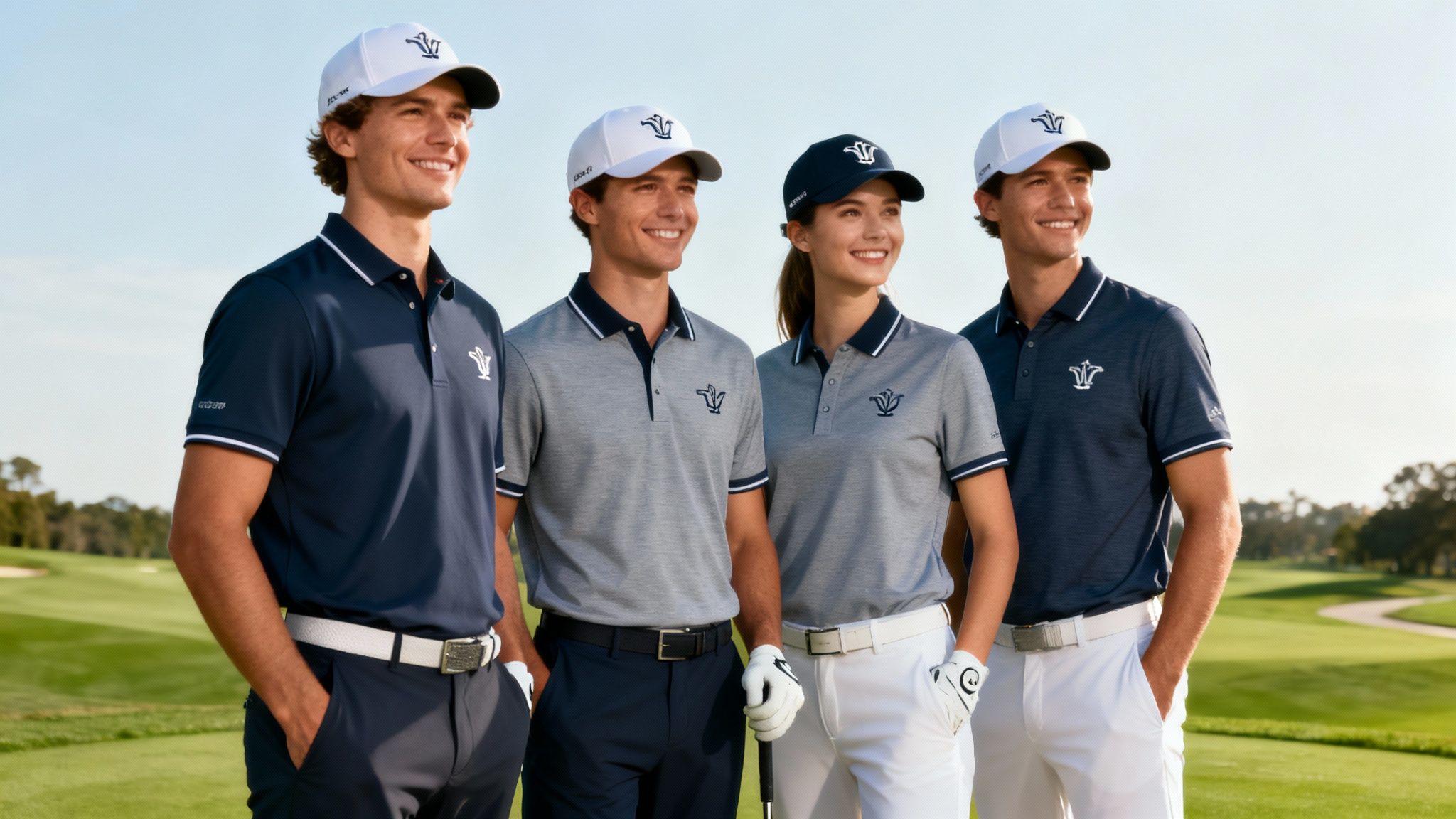
That first impression on the tee box can say it all. Picture your squad stepping out in sharp, coordinated gear. Before anyone even takes a swing, you've sent a clear message: we're organized, we're serious, and we're in this together.
This goes deeper than just aesthetics; it taps into the psychology of a uniform. Putting on the same colors and logo instantly sparks a sense of belonging and shared purpose. It strips away individual distractions and locks everyone into the same collective goal.
Building Unity and Confidence
Imagine a corporate tournament. One team arrives in a random assortment of polos, while your team shows up in perfectly branded custom gear. Right away, your group looks more professional and prepared, and that can be a real mental advantage. There's even a term for it: "enclothed cognition," which is the idea that the clothes we wear can genuinely influence our attitude and performance.
A great-looking uniform builds pride and a sense of accountability. Every player becomes a walking billboard for the team's identity, which can seriously ramp up their focus and commitment. It's no surprise that custom apparel for both pros and amateurs now makes up a massive 38% of all golf apparel sales. The secret is out.
Putting on a team uniform is a statement. It's a visual pact that reinforces shared goals, turns individual effort into collective power, and forges a bond that lasts long after the 18th hole.
From Casual Group to Cohesive Unit
The change can be incredible. I've seen casual weekend foursomes completely transform into a recognized, respected team just by adopting a signature look. It builds a stronger camaraderie and makes every round feel like a bigger, more important event. If you're looking for more pointers on getting your look just right, check out our guide on how to dress for golf.
In the end, custom golf team apparel really delivers on a few key fronts:
- Strengthens Team Identity: It creates a powerful, visual symbol of your unity.
- Boosts Player Morale: Nothing beats that feeling of pride and belonging.
- Projects Professionalism: You’ll make a strong, confident first impression every time.
- Enhances Focus: It helps align every player toward a common objective.
Choosing Gear That Actually Performs
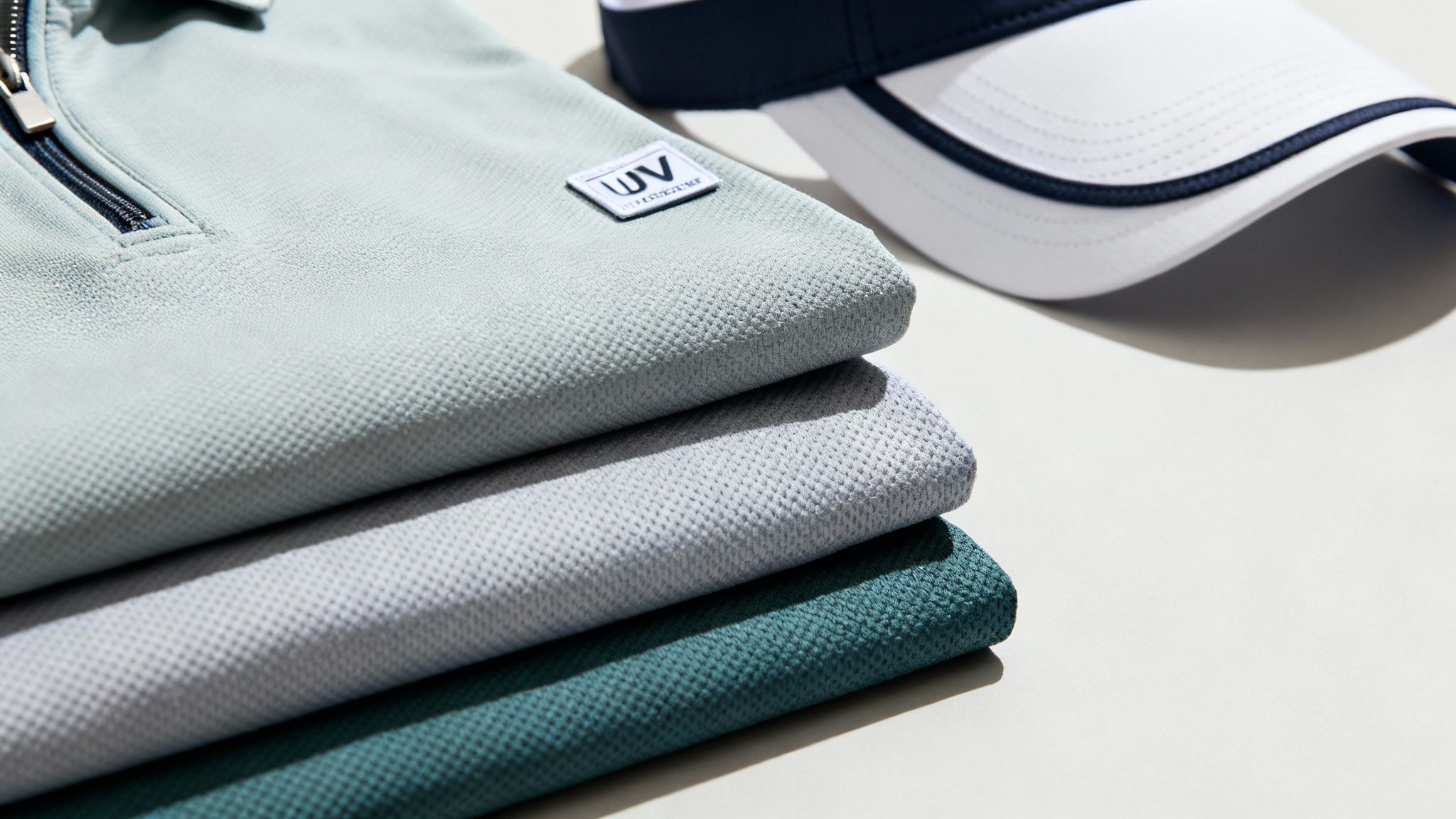
Let’s get real for a second. Not all polos are created equal, and the wrong choice can turn a perfect day on the links into a sweaty, miserable grind. When you’re picking the core pieces for your team's custom gear, performance has to be just as important as how it looks.
A shirt that looks sharp on the hanger but feels like a straightjacket during your backswing is a total waste. We're talking about avoiding that stiff, old-school cotton that gets heavy and damp the second you start to sweat. The game has changed, and it's all about technical fabrics built for athletes.
What to Look For in a Performance Fabric
These days, the major players are performance polyesters and stretchy polyester-spandex blends. Think of these materials as your secret weapon—they're engineered to work with you, not against you.
Here's the breakdown of what really matters:
- Moisture-Wicking: This is completely non-negotiable. Good performance fabrics pull sweat away from your skin to the shirt's surface, where it can evaporate in a flash. That's what keeps your players cool, dry, and focused on their putt, not their pit stains.
- Stretch and Flexibility: Keep an eye out for fabrics with at least 5-10% spandex (sometimes called elastane). That little bit of stretch makes all the difference, giving you a full range of motion without any pulling or tightness when you really go after a drive.
- UV Protection: This is a huge one. Many modern golf shirts have a built-in UPF (Ultraviolet Protection Factor) rating, often UPF 30+ or 50+. For a long day under the sun, it’s a critical feature that adds an extra layer of defense.
This focus on high-tech materials is a big reason why the global golf apparel market hit a value of around US$4.5 billion in 2024. Golfers are savvy, and they're willing to invest in gear that actually improves their comfort and game. You can dig deeper into these trends and their impact on golf fashion over at Persistence Market Research.
The best custom golf apparel feels like it's not even there. It should move with the body, manage temperature, and let the player focus entirely on their next shot—not on a restrictive collar or a damp shirt.
To help you navigate the options, here's a quick guide to some common fabrics you'll encounter.
Golf Apparel Fabric Comparison
| Fabric Type | Key Benefits | Best For | Considerations |
|---|---|---|---|
| Polyester | Moisture-wicking, wrinkle-resistant, durable, holds color well. | All-around performance in most weather conditions. A workhorse fabric. | Can sometimes retain odors if not cared for properly. |
| Polyester/Spandex Blend | Excellent stretch and recovery, moisture-wicking, allows for full range of motion. | Players who want maximum flexibility and a modern, athletic fit. | The spandex percentage affects the feel; higher % = more stretch. |
| Cotton | Soft, breathable, classic look and feel. | Casual rounds, clubhouse wear, or cool, dry climates. | Absorbs moisture (gets heavy and damp), wrinkles easily. |
| Merino Wool | Naturally moisture-wicking, breathable, odor-resistant, and temperature-regulating. | Layering pieces like sweaters or base layers for cooler weather. | Can be more expensive and requires more delicate care. |
Choosing the right material from the start ensures your team will be comfortable and looking sharp from the first tee to the 18th green.
Thinking Beyond the Polo
A truly professional team look goes way beyond just the shirt. To create a versatile uniform, you need to be ready for whatever the weather decides to do on game day.
Consider adding a few layering pieces to your order. A lightweight quarter-zip pullover is perfect for those crisp morning tee times. It gives you just enough warmth without being bulky, and it’s easy to take off as the day heats up. Plus, they offer a great secondary spot for your logo, like the sleeve or back yoke.
And you can't forget the headwear! A matching set of hats or visors is the finishing touch that ties the whole look together. It screams "team" and gives your players that crucial sun protection. For a little inspiration, take a look at our guide on the best golf hats for your team. Getting the accessories right is how you make sure your team looks like a cohesive, professional unit from head to toe.
Designing Your Team's Signature Look
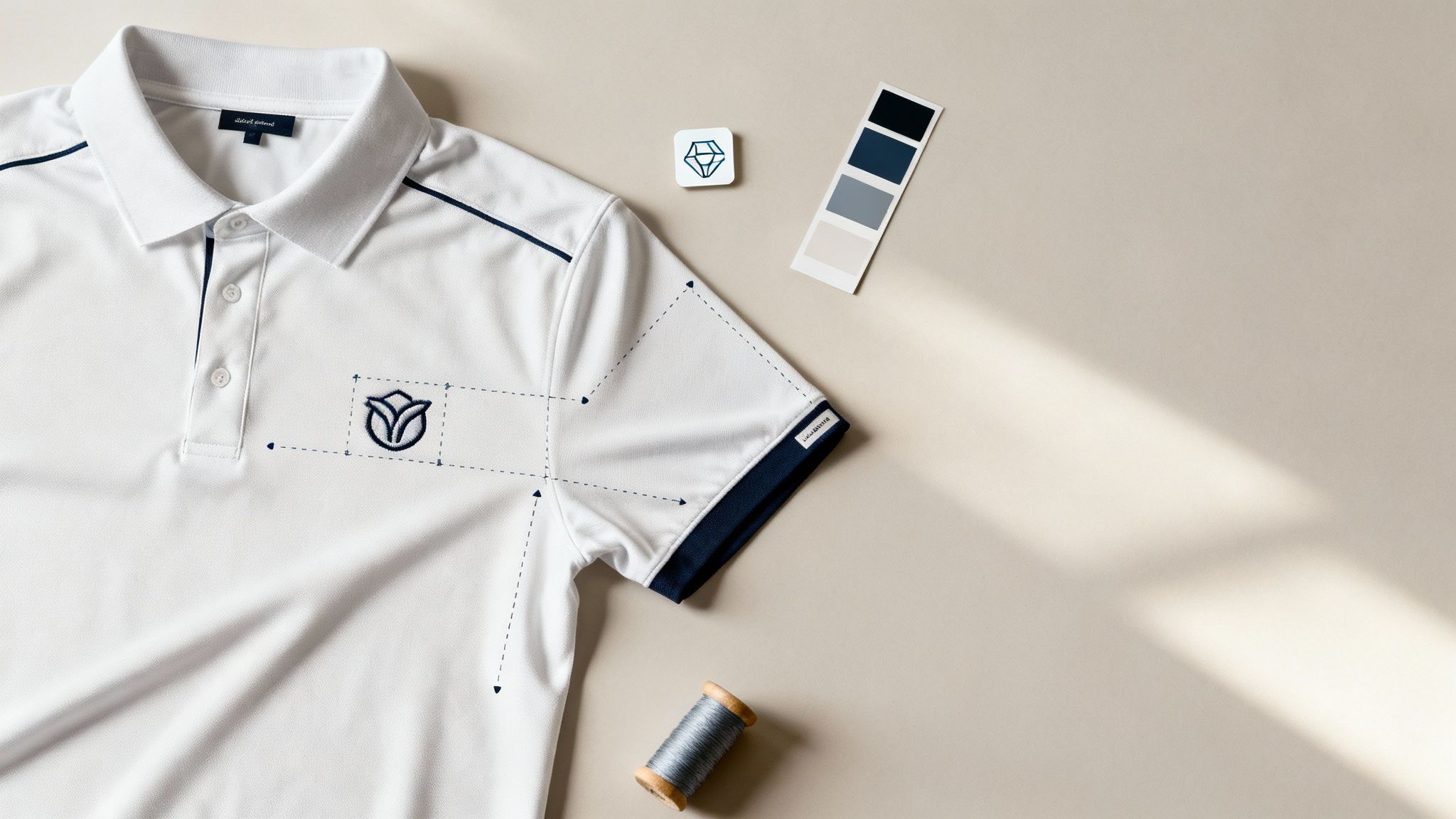
Alright, this is where the magic happens. We’re moving beyond ideas and turning them into gear that looks like it belongs on the tour. A great design doesn’t just make your team match; it gives them an identity and a presence that says you're here to win.
The first big decision? Where to put that killer logo. This one choice can instantly steer your apparel from old-school classic to modern and athletic.
Strategic Logo Placement
Think of your shirt or quarter-zip as prime real estate. The most popular spot, for good reason, is the left chest. It’s the OG placement—clean, professional, and never gets in the way of a swing. You can’t go wrong with it.
But why stop there? We're seeing more and more teams get creative. Placing a logo on the sleeve, especially the right one, has that "sponsored pro" vibe. Another spot I love is the back yoke, right below the collar. It’s perfect for a secondary logo, a team motto, or even the year the club was founded. It’s a subtle flex that shows you’ve thought about every detail.
- Left Chest: The timeless, can’t-miss classic.
- Sleeve: A modern, athletic look that adds a touch of pro-level style.
- Back Yoke: A high-end placement for that extra custom detail.
Choosing the Right Decoration Method
Once you've picked the where, it's time to decide the how. For golf apparel, you're primarily looking at two champs: embroidery and heat transfer. Each brings something different to the table, and the right choice often comes down to the fabric.
Embroidery is the tried-and-true method, stitching your design directly into the fabric with thread. It gives you a textured, durable, and seriously premium finish. This is the go-to for traditional pique polos, hats, and heavier items like quarter-zips. That raised feel just screams classic country club.
Heat transfer, on the other hand, is the modern workhorse. It uses heat to apply a design flat against the surface. This is your best friend for today’s lightweight, stretchy performance fabrics. It moves with the garment, won't pucker, and can nail those super-detailed logos with gradients and tiny text that embroidery would struggle with.
My rule of thumb? For a classic cotton-blend polo, embroidery is king. But for a sleek, modern polyester-spandex performance shirt, a quality heat transfer keeps the shirt flexible and feels way better against your skin during a long round.
The Non-Negotiable Art File
Listen up, because this tip will save you a world of hurt. The format of your logo file is everything. To get that crisp, clean look you’re paying for, you absolutely must provide your logo in a vector format. That means a file ending in .AI, .EPS, or .SVG.
Why the big fuss? A regular image file (like a .JPG or .PNG) is made of pixels. When you try to make it bigger, it gets blurry and jagged. A vector file is built on mathematical paths, so you can scale it from the size of a dime to the side of a bus, and it will stay perfectly sharp. Trust me, sending a low-res .JPG is the number one rookie mistake, and it’s a fast track to a muddy, unprofessional-looking logo.
Crafting a Winning Color Palette
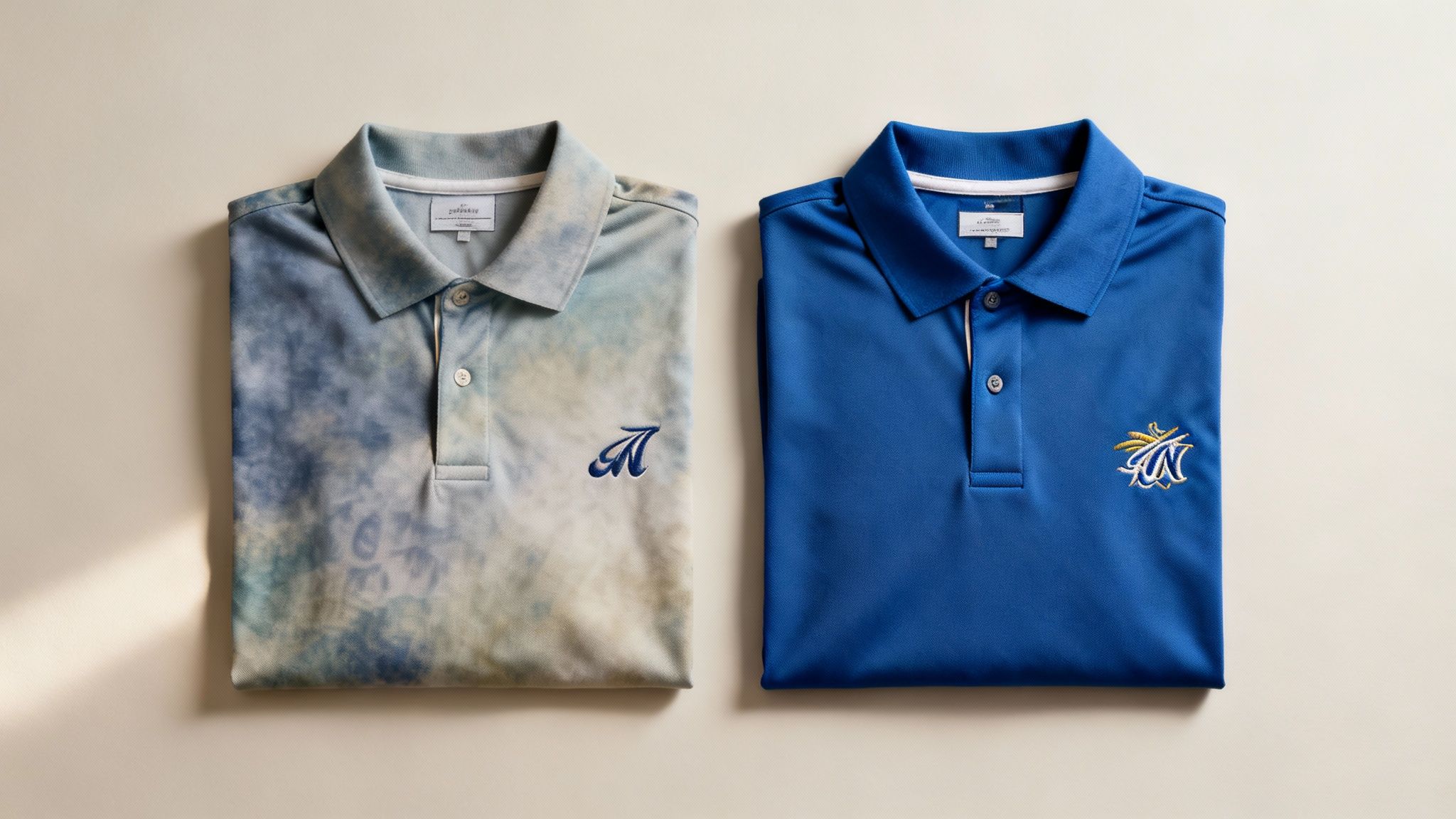
Last but not least, let's talk color. You want your team to get noticed, not become a walking eyesore. The trick is to find that sweet spot between bold and obnoxious. A solid strategy is to pick a primary color for the apparel itself and then use one or two accent colors in the logo to make it pop.
Think about a sharp navy polo. A simple white logo looks clean, but adding a pop of bright orange or electric green in the logo? Now that looks custom and intentional. It’s this kind of cohesion that makes a team look like a unified force on the fairway.
Nailing the Order: From Sizing to Shipping Day
You can have the coolest design and the most advanced fabric in the world, but it all means nothing if the gear doesn't fit. This is where the logistics get real, and getting it right separates the pros from the amateurs.
Let's be honest, the biggest nightmare of any group order is sizing. Just asking everyone for their "size" is asking for trouble. A "Large" from one brand can feel like a "Medium" from another, and even different shirt styles from the same company can fit completely differently. We need a better plan.
The No-Fail Sizing Strategy
The only way to do this right is to get a detailed sizing chart from your supplier for the exact item you're ordering. Don't settle for a generic brand chart; you need the measurements for that specific polo, that particular quarter-zip.
Once you have that chart in hand, here's how you get it done:
- Tell your players to find their favorite-fitting shirt. The one they always reach for.
- Have them lay it flat and measure it. They need two numbers: chest width (from armpit to armpit) and the length from the top of the collar to the bottom hem.
- Match those numbers to the vendor's chart. This simple trick is a million times more reliable than just guessing "XL."
When a player is on the fence between two sizes, always tell them to size up. Performance apparel is notorious for its athletic, tapered cut. A slightly loose shirt is always better than one that’s uncomfortably tight on the backswing.
This goes for accessories, too. For things like gloves, a proper chart is a must. You can use a detailed golf glove size chart to make sure every player has a perfect, non-slip grip.
Cracking the Code of the Vendor Quote
After you send in your design and quantities, you'll receive a quote. This isn't just a price tag; it's the blueprint for your entire order. You need to read it carefully.
Look for a few key things:
- Minimum Order Quantity (MOQ): This is the magic number—the fewest items you have to order. Make sure your team roster hits that mark.
- Production Timeline: This is how long it takes to make your gear after you sign off on the final design. It doesn't include the time it spends on a truck getting to you.
- Setup Fees: You might see one-time charges for things like "digitizing" a logo for embroidery or creating screens for printing. This is pretty standard.
The single most critical step in this entire process is approving the digital proof. This is your last chance to catch anything—a misspelled name, a slightly off-brand color, a logo that's a half-inch too low. Treat this review like you're reading a two-foot putt to win the club championship.
The Final Green Light and Delivery
That digital proof is the final word. Seriously, have a teammate or two look it over as well before you give the go-ahead. Once you approve it, the machines start running, and there's no going back.
Finally, don't forget about shipping time! If you need your gear for a tournament on the 15th, work backward from that date. Add in the production timeline, then add a few buffer days for shipping. Confirm the estimated delivery date with your vendor so your team isn't unboxing their new stuff on the first tee.
Common Pitfalls in Custom Apparel Orders and How to Dodge Them
Alright, let's talk about the traps. After all the fun of designing the perfect gear for your golf team, a few simple slip-ups can turn your dream order into a total bogey. We've seen it all over the years, and trust me, learning from these common mistakes is the easiest way to guarantee a smooth process and a fantastic final product.
The first and most tempting pitfall? Chasing that rock-bottom price. Getting a quote that’s way cheaper than everyone else feels like a massive win, but it’s almost always a huge red flag. That bargain-basement price usually means they’re cutting corners on the garment itself—think thin, scratchy fabrics that pill after one wash or polos with collars that curl up like bacon.
Remember, your team’s apparel is a direct reflection of your standards. A cheap-feeling shirt doesn't just underperform on the course; it makes the entire project look amateur. Saving a few bucks per player just isn't worth the hit to your team's image and morale.
The Devil Is Always in the Details
Another classic mistake happens long before a single stitch is made: submitting a low-resolution logo. I get it, it’s easy to just pull the logo off your website or a business card, but those files are pixelated nightmares waiting to happen. A blurry, low-quality image file results in a muddy, unprofessional embroidery or print. Every. Single. Time.
This isn’t some minor detail; it’s the centerpiece of your custom apparel. You have to insist on using a vector file format like .AI, .EPS, or .SVG. That’s the only way to guarantee your logo stays perfectly crisp and sharp, no matter the size.
Pro Tip: Never, ever assume your order will arrive on time. Always build a buffer into your timeline. If your tournament is on the 20th, don't set your "need by" date as the 19th. Aim for a full week earlier to account for potential production delays or shipping snafus. It will save you a world of stress.
The Little Oversights That Cause Big Headaches
Beyond those two biggies, a few smaller oversights can cause major headaches. It’s easy to get caught up in the design and forget the boring (but critical) stuff.
Here are a few common tripwires to watch out for:
- Forgetting the Proof: Skipping a thorough review of the digital proof is a recipe for disaster. This is your absolute last chance to catch typos, wrong colors, or placement errors before it’s too late. Seriously, get a second set of eyes on it.
- Guessing on Sizes: Not using the specific sizing chart for the exact garment you're ordering is the #1 cause of returns and unhappy players. A "Large" from one brand is completely different from another. Don't guess.
- Ignoring Shipping Time: Production time is not delivery time. A two-week production window doesn't mean the box lands on your doorstep in 14 days. You have to factor in an extra 3-5 business days for ground shipping, at a minimum.
Dodging these common pitfalls is pretty straightforward once you know what to look for. By prioritizing quality over a cheap price tag, providing the right artwork, and managing your timeline like a pro, you can ensure the custom golf apparel that shows up is something everyone will be genuinely proud to wear.
Got Questions About Your Custom Golf Gear? We've Got Answers.
Ordering custom apparel for your golf team can feel like lining up a tricky downhill putt. It's easy to overthink it. But once you've landed on a killer design and picked your gear, a few key questions always seem to pop up. Nailing these final details is the difference between getting gear you like and getting gear you absolutely love.
Let's walk through these common last-minute queries. Think of this as your final pre-shot routine before you pull the trigger on the order.
How Long Until My Gear Actually Shows Up?
This is the big one, isn't it? Especially when you've got a tournament circled on the calendar. As a rule of thumb, you should plan for about 2-4 weeks from the moment you sign off on the final design proof. That timeline can definitely shift depending on how fancy your design is and how big your order is.
A simple one-color embroidered logo on 20 polos? That's going to be on the faster end. But if you're doing a multi-color design with logos on the sleeve, chest, and back for 100 quarter-zips, you'll need to plan for a bit more time. If you're in a pinch, don't be afraid to ask about rush options. Most suppliers have them for an extra fee, and trust me, it can be a real lifesaver.
Here's a pro tip: Always, always confirm the production time separately from the shipping time. The day your order is finished isn't the day it arrives. Build in a few extra days for shipping to avoid that heart-pounding panic right before your event.
Embroidery vs. Screen Printing: What's the Right Call for Polos?
For that classic, country-club-approved look, embroidery is the undisputed champion. It just has a premium, textured feel that looks fantastic on the performance fabrics used in modern golf polos. It’s durable, professional, and honestly, it’s what people expect to see on high-quality golf gear.
So, where does printing fit in? Screen printing is great for big, bold graphics, like something you'd put on a fun t-shirt for a golf trip or across the back of a windbreaker. For today's stretchy, moisture-wicking polos, though, a modern heat transfer is often a better bet than screen printing. It moves and flexes with the fabric, so you don't get that stiff, plasticky feeling.
How Do I Make Sure Everything Fits?
Ah, sizing. The number one cause of headaches in the custom apparel world. But it’s a totally avoidable problem! Please, do not just guess based on "S, M, L" labels. One brand's Large is another's Medium, and you'll end up with a mess.
The foolproof method? Get a specific sizing chart from your vendor for the exact item you're ordering.
- Have your team members measure a shirt they already own and love (chest width and body length are key).
- Compare those numbers to the chart.
- For total confidence, ask your vendor if they can send you a "sizing run"—a blank sample of each size that everyone can physically try on. It’s a small extra step that eliminates all the guesswork.
What Kind of Logo File Do I Need to Send?
This is a big one, and it's non-negotiable if you want a professional-looking result. You absolutely need to provide your logo in a vector file format.
You're looking for file extensions like .AI (Adobe Illustrator), .EPS, or .SVG.
Why does it matter so much? Unlike a .JPG or .PNG, which are pixel-based and get blurry when you enlarge them, a vector file is made of mathematical lines and curves. It can be scaled to the size of a golf ball or a billboard without losing an ounce of quality. This ensures your logo looks perfectly crisp and clean on the final product. If you don't have a vector file, ask your vendor if they can help create one. It's a small investment that pays off big time in the final look.
Ready to create custom apparel that will have your team looking and feeling like they can win the whole thing? At 2ndShotMVP, we specialize in high-quality, stylish golf gear that performs on and off the course. Explore our collection and start designing your team's signature look today!

